Albino ginger fur seal
On a late Autumns morning, I am walking along the rocky coastline of Kaikōura, a small coastal town on the South Island of Aotearoa New Zealand. This is a place where the mountains meet the sea in the Southern Ocean. Only a short distance from the rugged coastline, is a deep underwater canyon, full of nutrients that sustains this unique eco system. Acrobatic dusky dolphins can be seen leaping into the air, hundreds of them moving as one. Hectors dolphins swim in the shallow murky waters, a place where a small dolphin can feel safe from predators. Albatross and giant petrels are soaring above the waves in search of a feed for the day. Scattered along the coastline are a great number of Kekeno/New Zealand fur seals that calls this place home. Many of them are mothers with this season’s pups and the odd large bull is sprawled out on the rocks, basking in the sun. It is the time of year for many pups to be out and about. They have been feeding off their mother’s milk for the last couple of months and are slowly growing larger and stronger as each day goes by. In little rock pools by the water’s edge, the young pups gather in numbers, playing in the shallow and protected waters. Playful fights break out between the energetic pups. As they grow, they will start to venture further away from the colony in search of their own food and eventually venture into deeper waters.
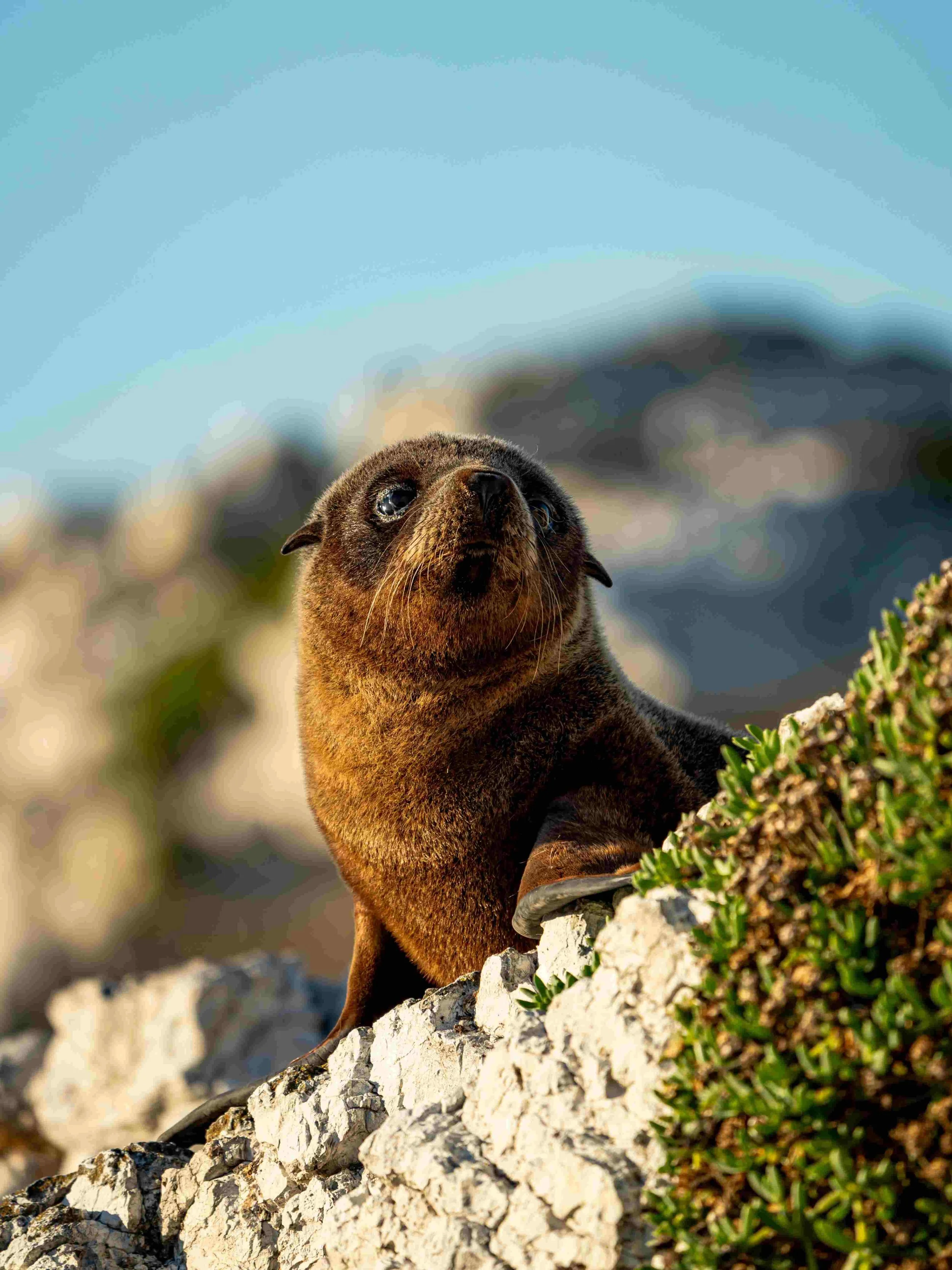
Pictured: A young fur seal pup in Kaikōura
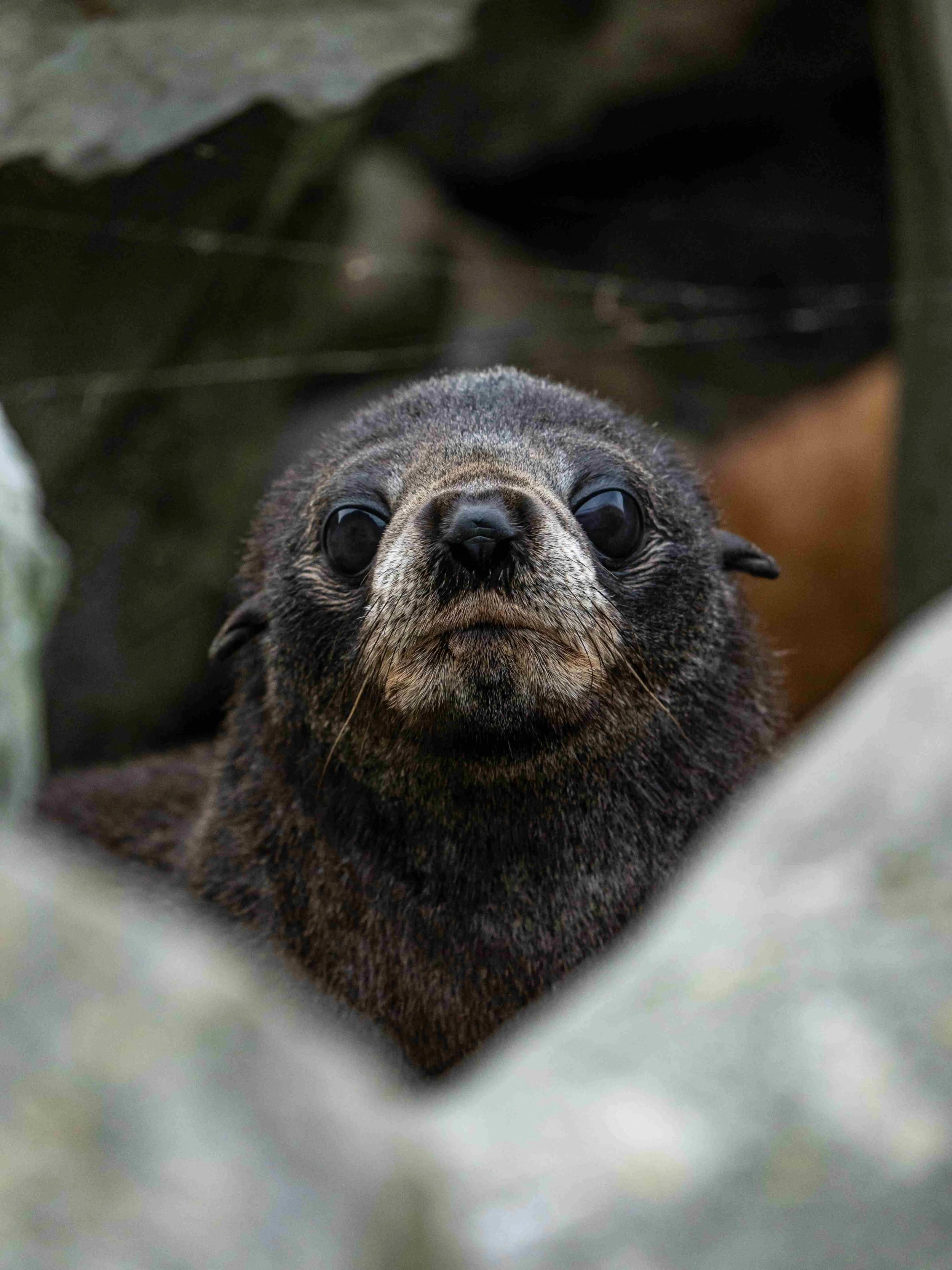
Most fur seals have their dark brown coat, a coat of fur that was heavily sought after in the 1800s for meat and pelt, and New Zealand fur seals were brought to the edge of extinction due to them being hunted. It is believed that there were about 2 million fur seals, a number that dropped drastically once the Europeans arrived and starting hunting the seals for pelt. The fur seal population is now in recovery and its numbers have increased since they gained protection in 1978. Today they are fully protected under the Marine Mammals Protection Act 1978 which states “It is an offence to harass, disturb, injure or kill marine mammals.”, and the population is estimated to be increasing.
These seals may appear clumsy on land as they waddle along the rocky coastline, in the water they are anything but. With their flexible flippers and strong muscles, they move with ease and agility in the water. While swimming in the deep waters of the Kaikōura canyon, two fur seals are curiously approaching after playfully swimming around one another blowing bubbles. I swim down and one seal instantly becomes excited and dives down to greet me.
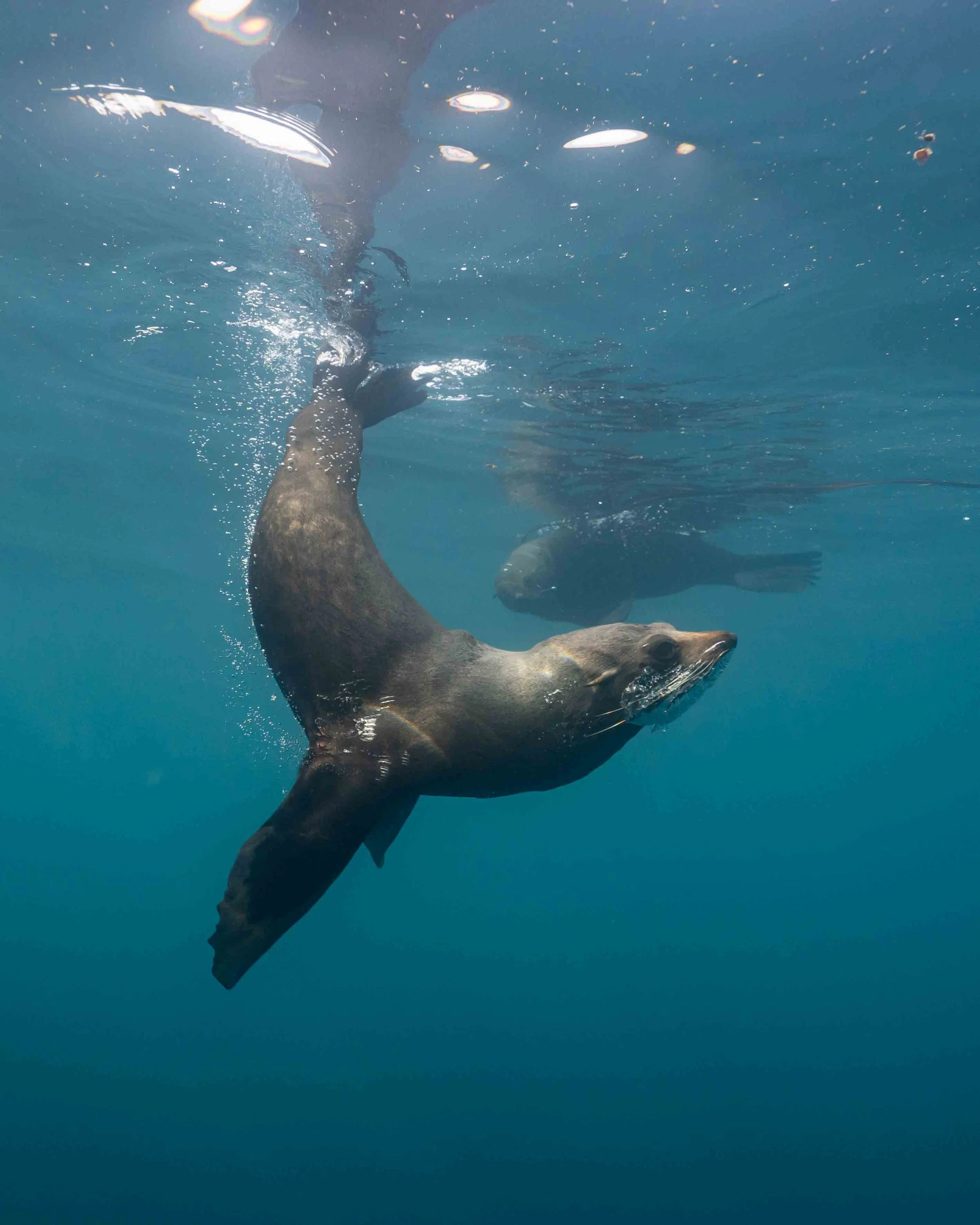
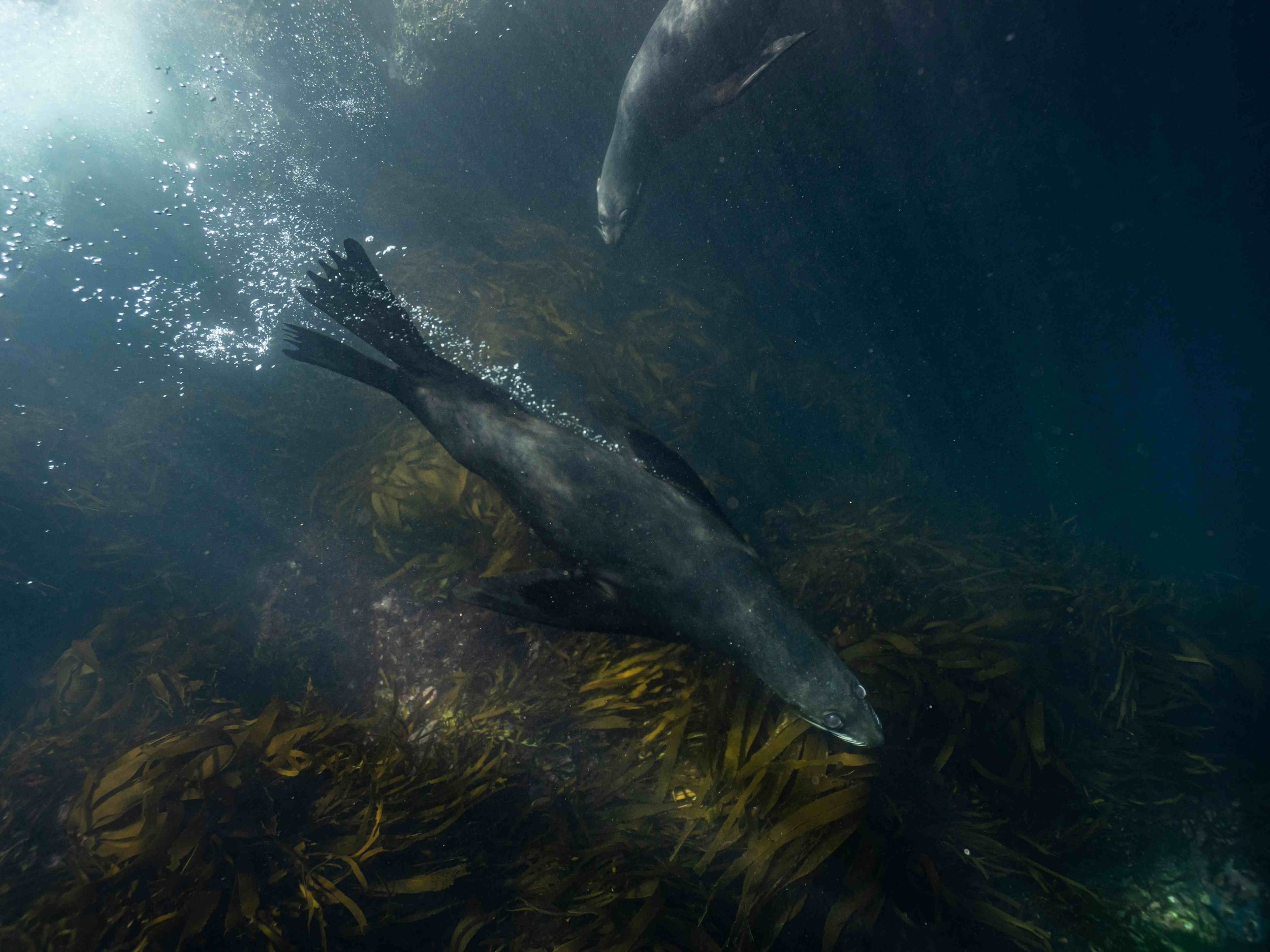
They are proficient hunters and does the majority of their hunting at night when their prey becomes active. Although most of their hunting takes place at night, they certainly know how to find food during the day as well. Right on the edge of where the canyon starts from the coastline appears to be a great place for seals to find a feed, especially in the morning hours of the day. As a seal is returning to the surface after a prolonged dive, the commotion begins. Albatross, petrels, shearwaters and gulls all arrive to where the seal has surfaced. With their great sense of smell, these birds can smell food from miles away. The seal has returned with a large ray in its mouth. As seals cannot easily break its prey into smaller pieces, it thrashes its prey onto the surface and over time the ray breaks into more manageable bite sizes. As pieces are flying through the air, the birds take advantage and grab any piece they can get a hold of, and are waiting patiently for the right time to snatch a meal.
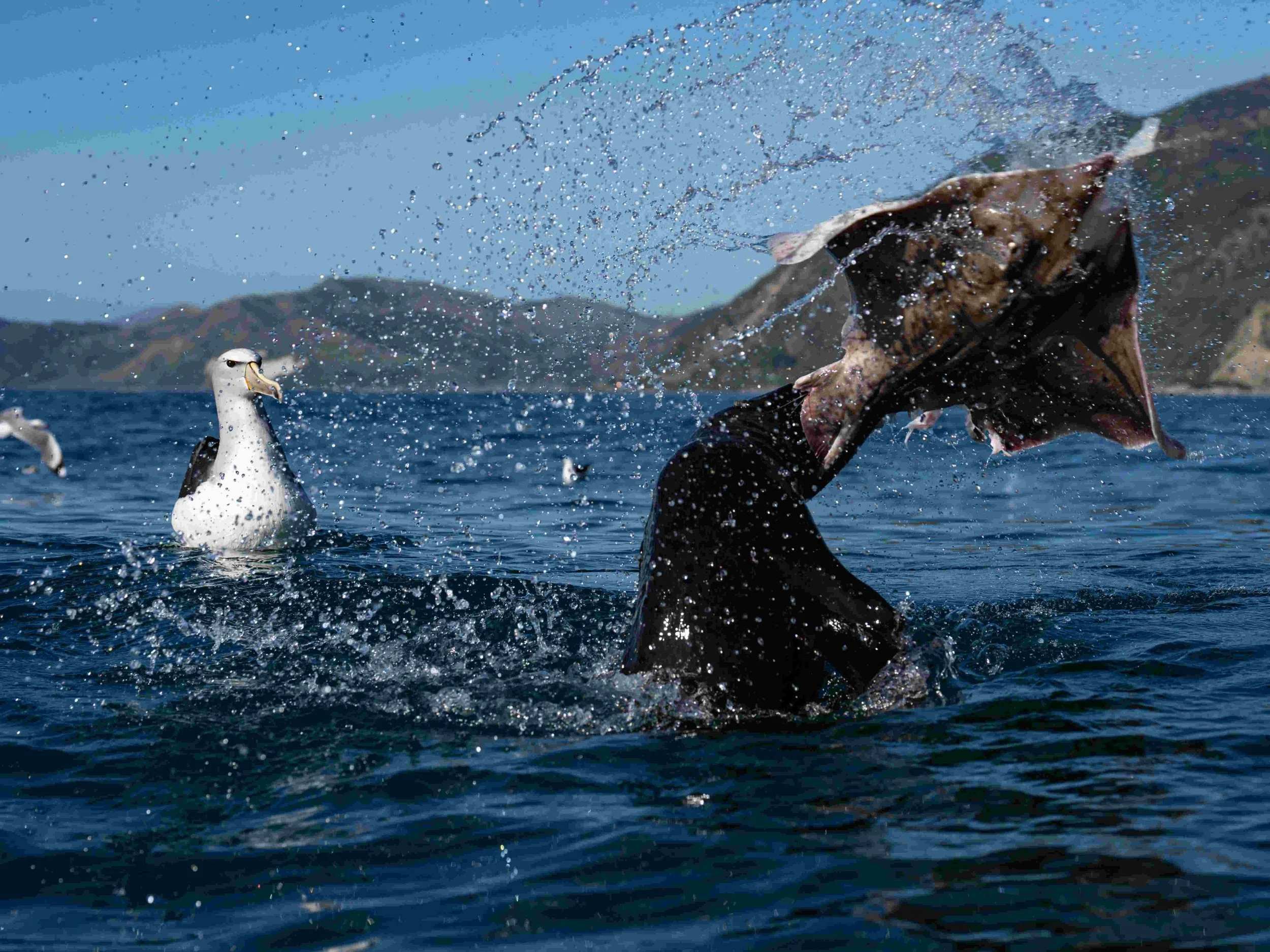
An unfortunate ray becomes the meal of a NZ fur seal
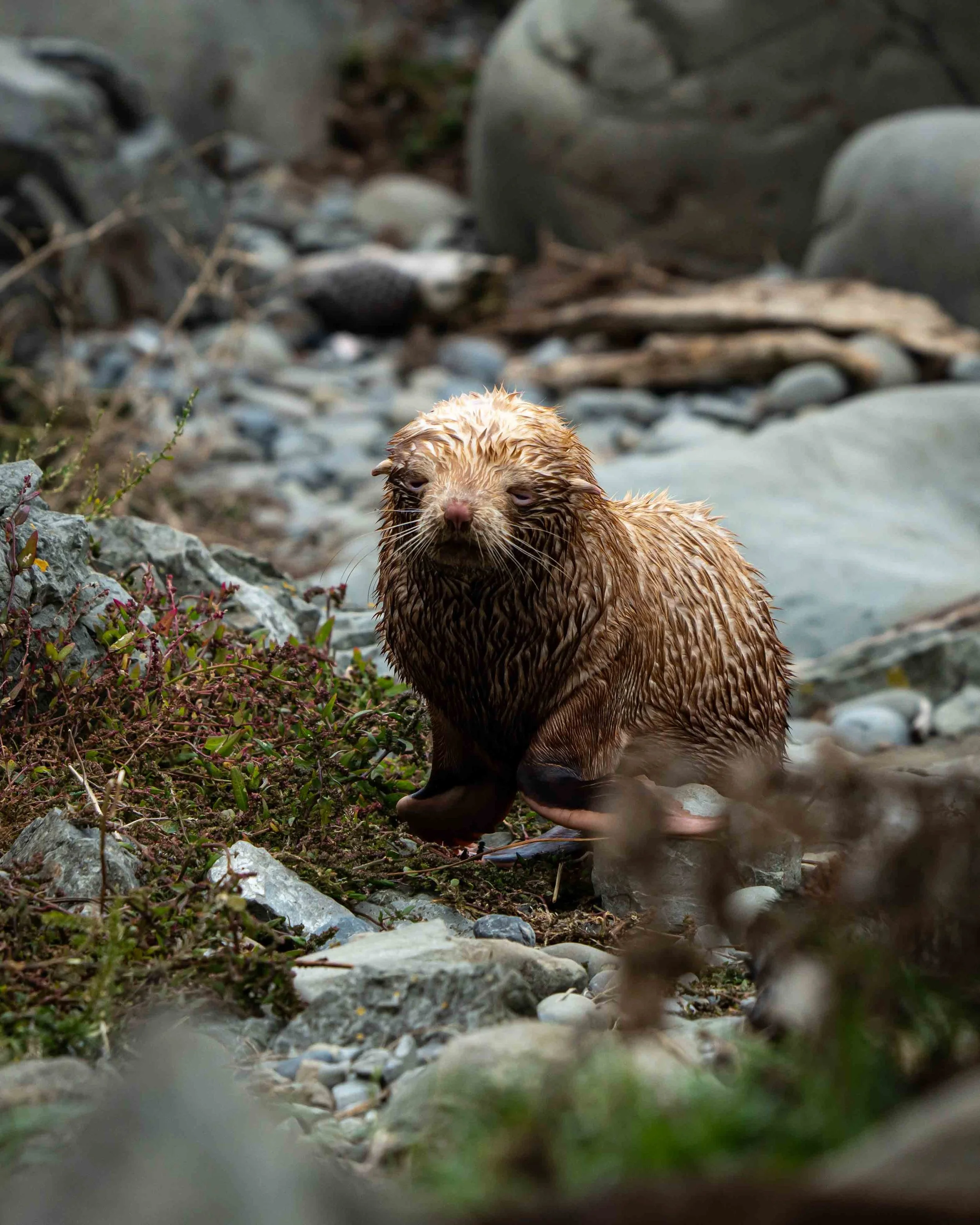
At one of the many seal colonies along the Kaikōura coastline, I look around the active colony of fur seals, and I spot something which appears to be out of place. Amongst the rocks rests a young male pup, unlike all the others around him. Rather than the typical dark brown coat that most seals have, this one appears to be golden. With its golden fur there is no mistaking that he is different from the other seals. A standard day for the life of a fur seal contains plenty of rest and sleep, this young pup is doing just that. About 20 metres away, a large adult seal is moving through the colony, with not a care in the world who is in its path. As it moves closer, the pup gets disturbed by the commotion and is woken from his morning rest. As a result of being disturbed, he moves out of the shadows and into the sun. In the sun he appears to be glowing, a golden orange colour which stands out against the rocky background, a ginger albino fur seal. In the shadows nestled in the rocks, he almost blended in with the round rocky coastline. Once out in the sun, the contrast is stark and he stands out like no other. He waddles along to visit one of the shallow pools, playing with the other young pups. Playtime is an important time for the young pups, this is how they learn how to defend themselves and how to fight other seals. After a playful time in the pools, he ventures back on dry land. Finding a protected area amongst the rocks, it is time for a much-needed afternoon sleep.
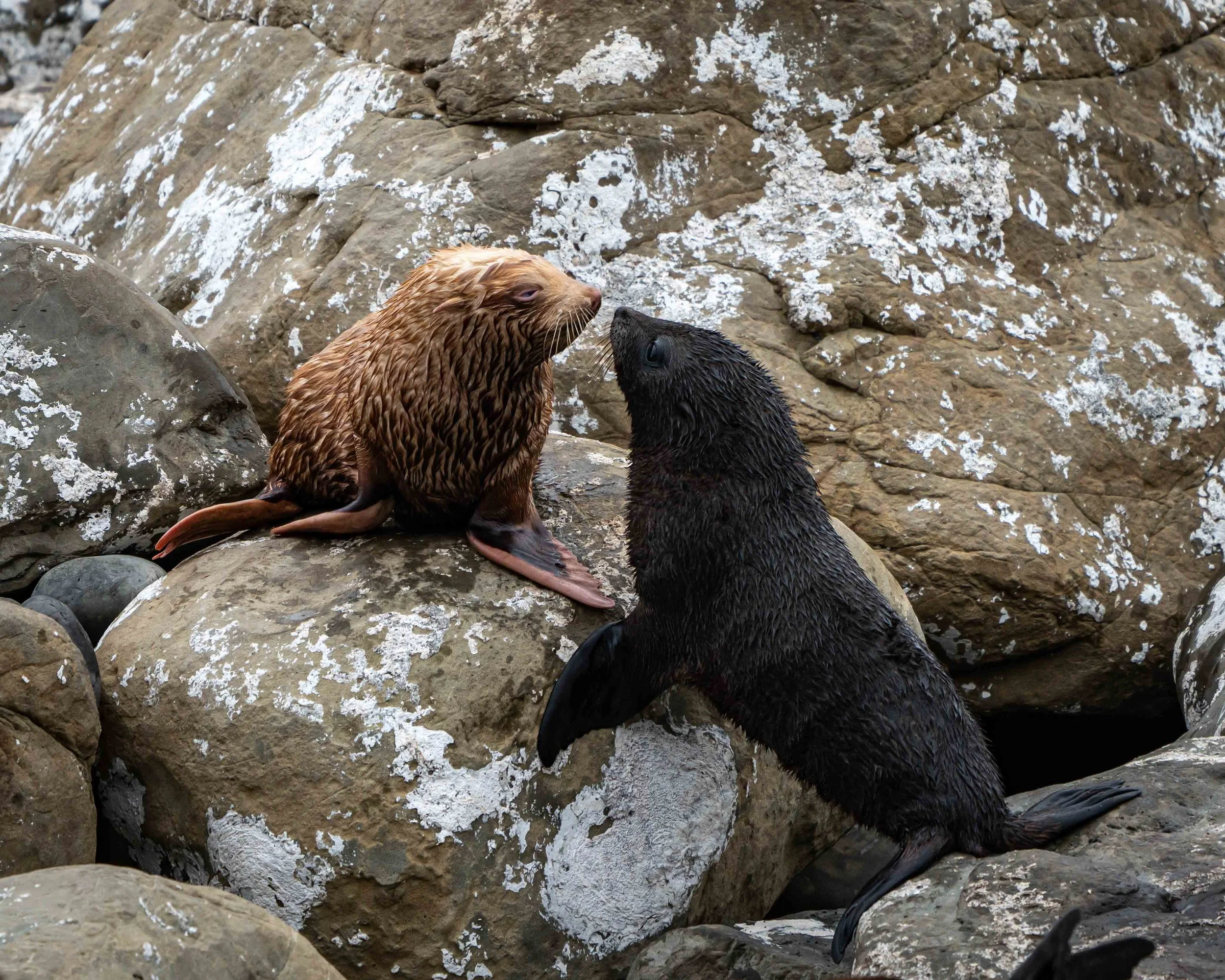
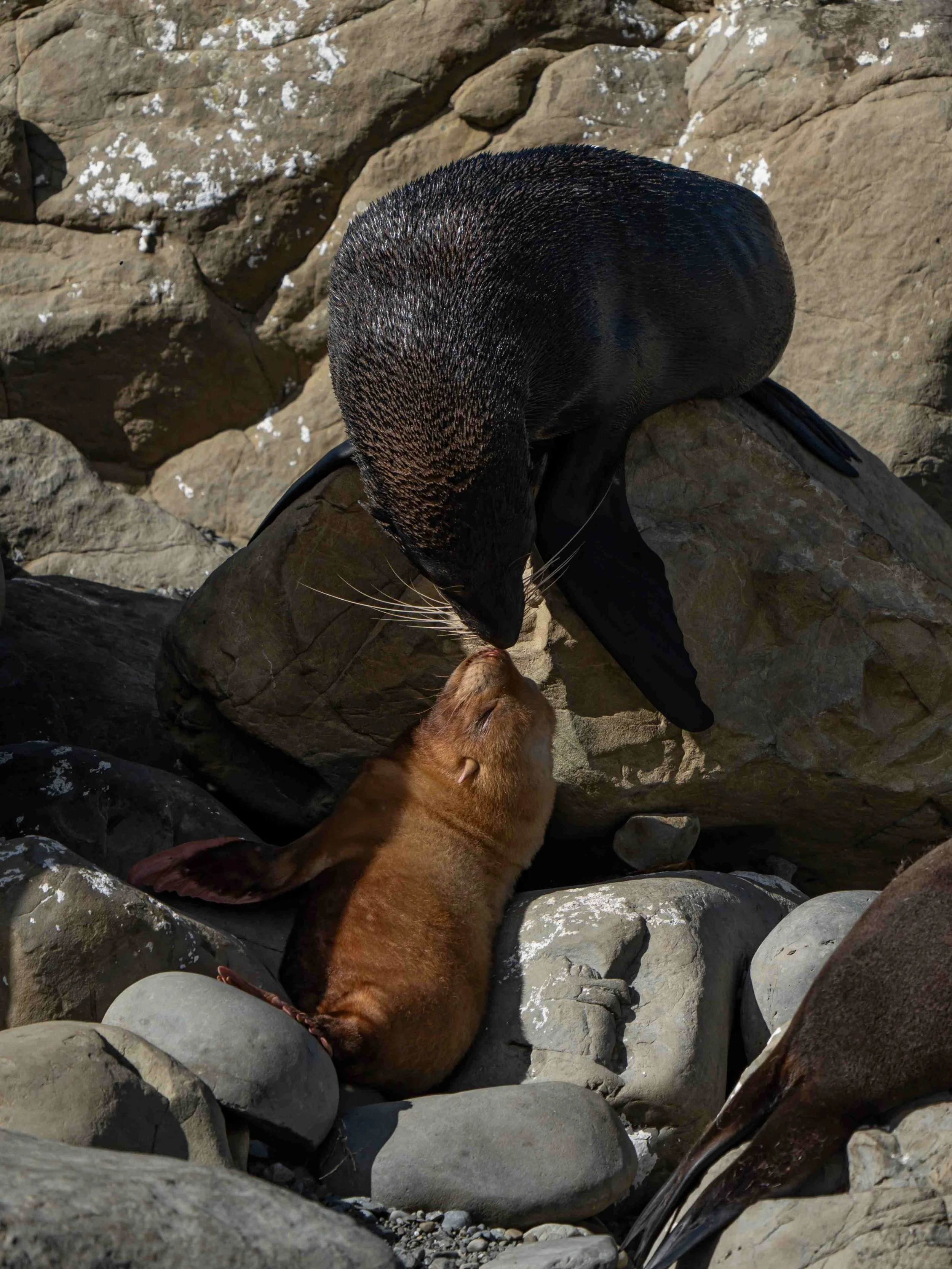
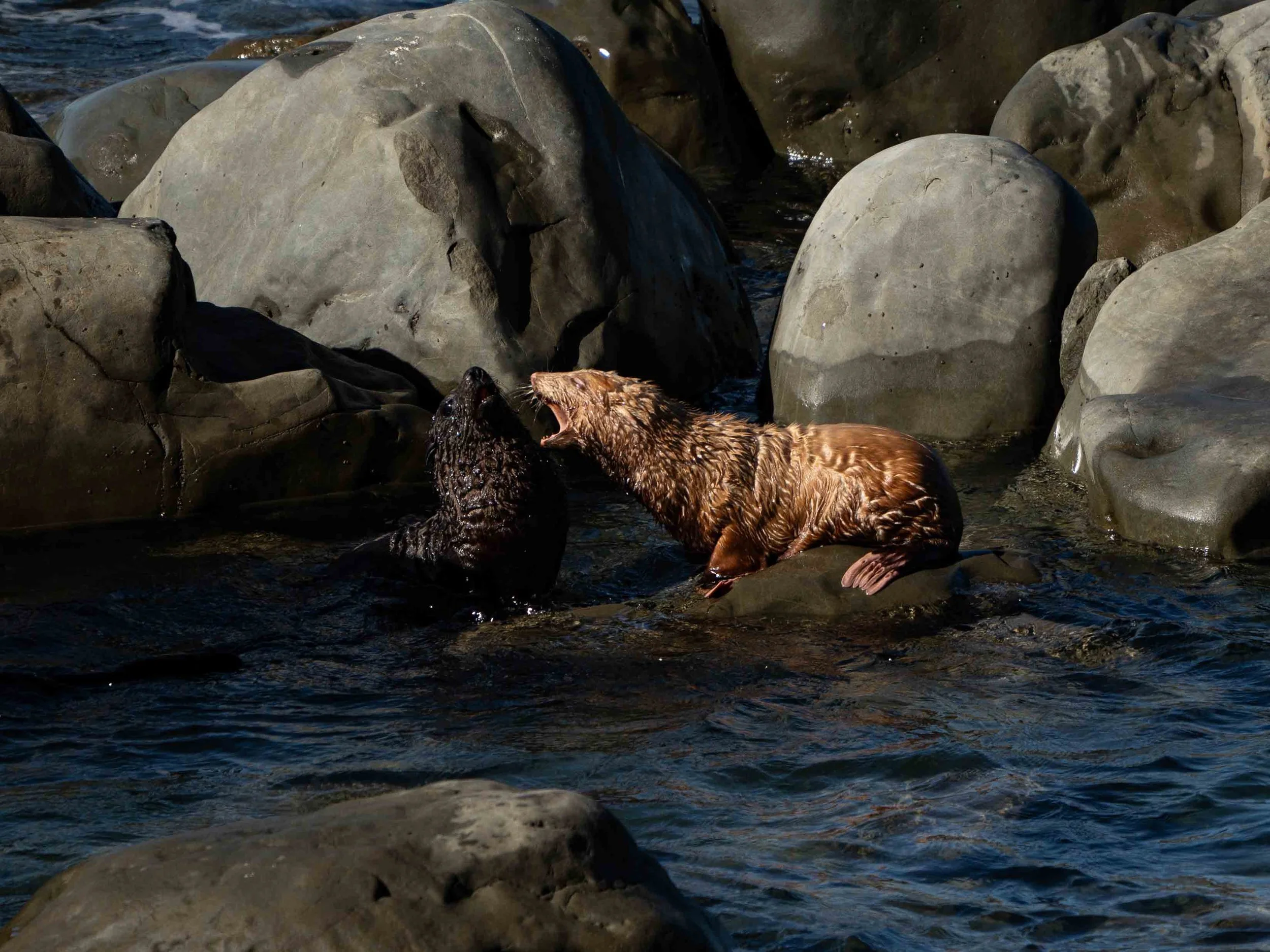
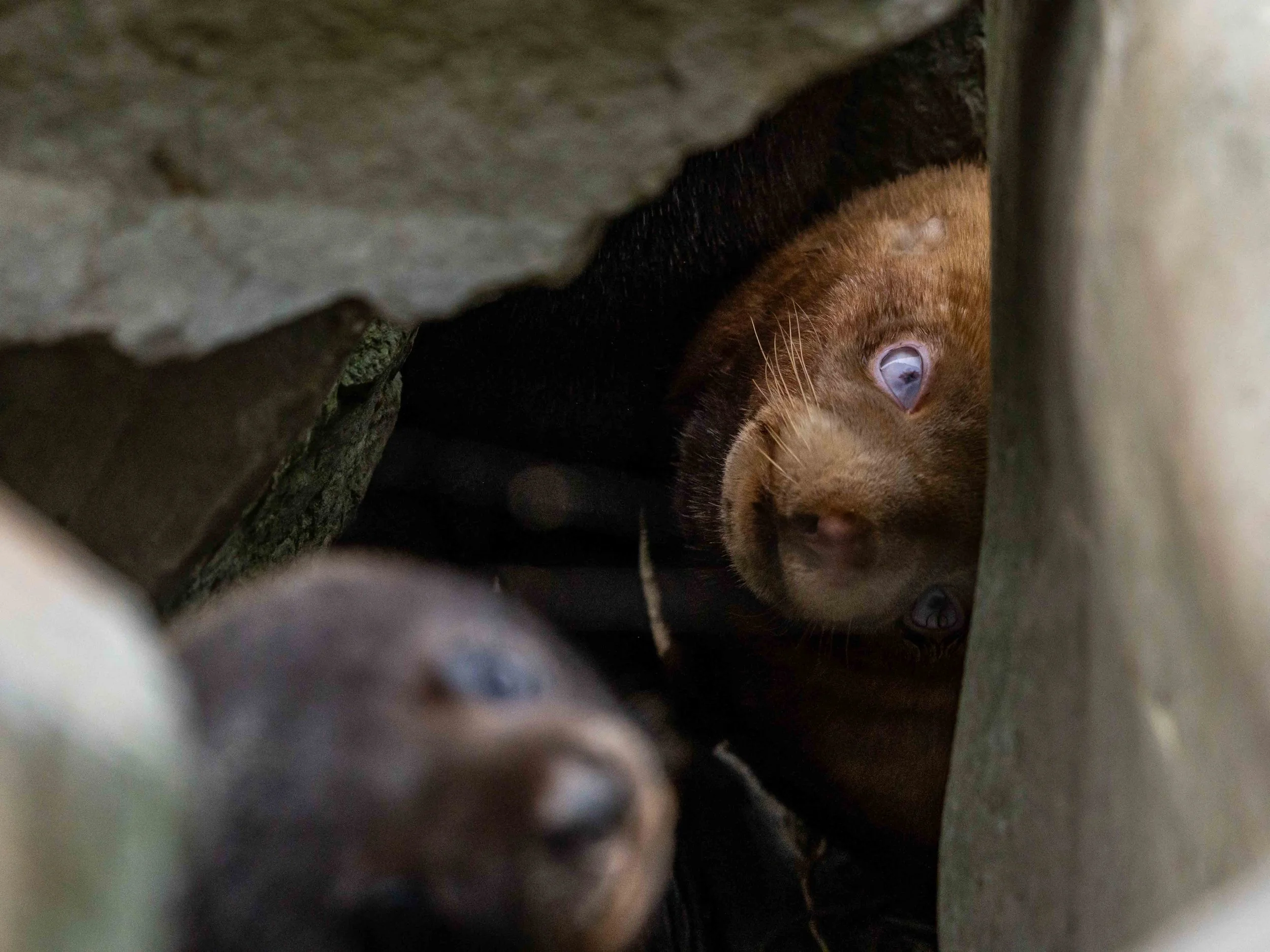
It is believed that only one in one hundred thousand fur seals might be albino. Rather than being leucistic, this ginger pup is albino. Leucistic seals are white or blonde due to the lack of melanin pigmentation on its fur, and it does not affect its skin and eyes. This pup, however, is ginger, has light red coloured flippers and ears, and the most incredible icy blue eyes, which is typical for an albino fur seal.
Looking closer at the top of his head, it appears as though he might have had a haircut. This is actually the case. There is a chance that you might come across a young pup with a brand-new haircut during Autumn and fur seal pup season in New Zealand. This is a part of an ongoing population study of the New Zealand fur seals by the Department of Conservation. Marking seals with a haircut, is a non-permanent way of marking them to be able to get an estimation of the seal population in a specific area. By marking a set number of seals and returning to the same place and counting how many of these seals are present during a visual check, an estimation of the specific population can be made. After a couple of weeks, the fur will grow back on the seals head and they are back to their fluffy selves.
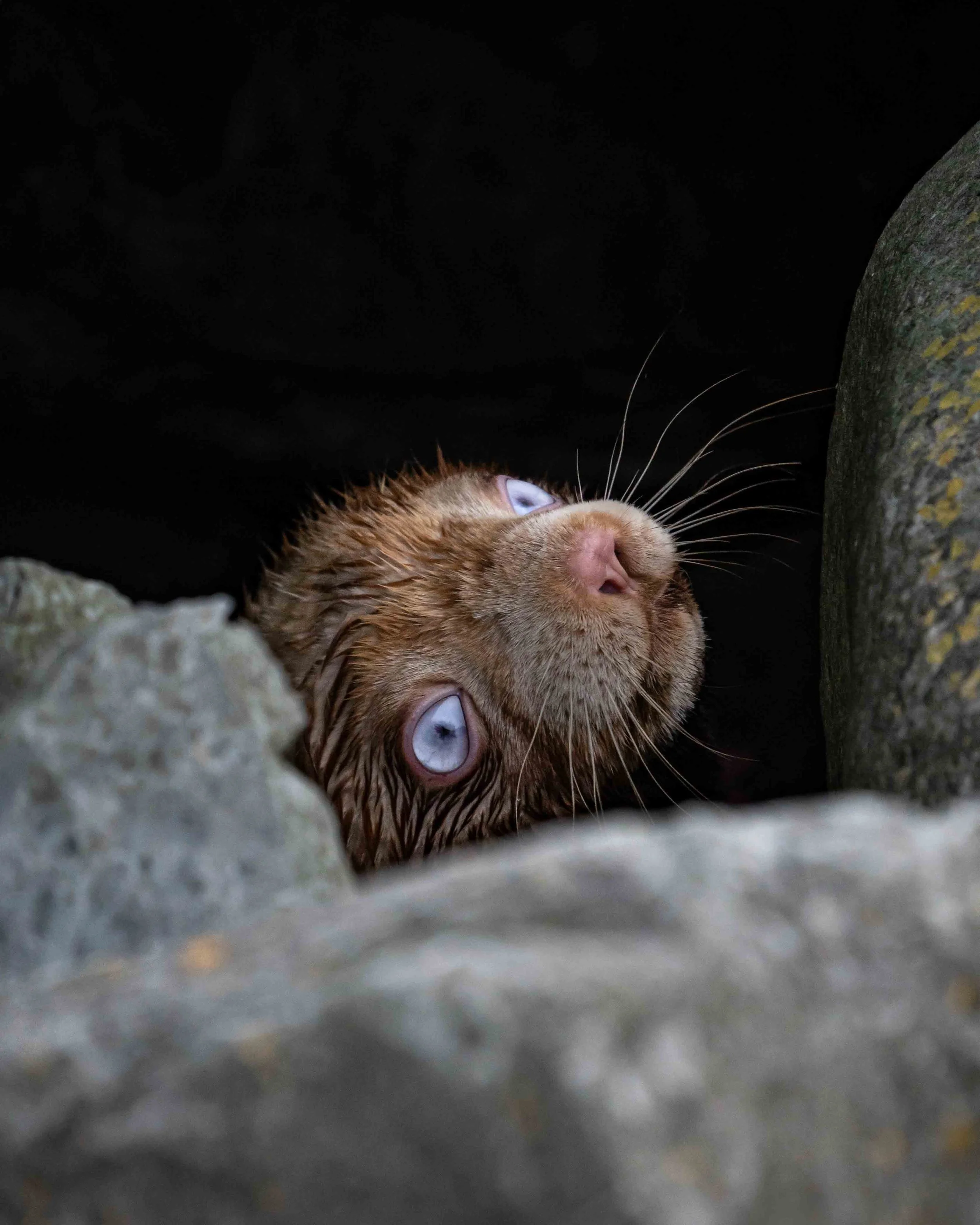
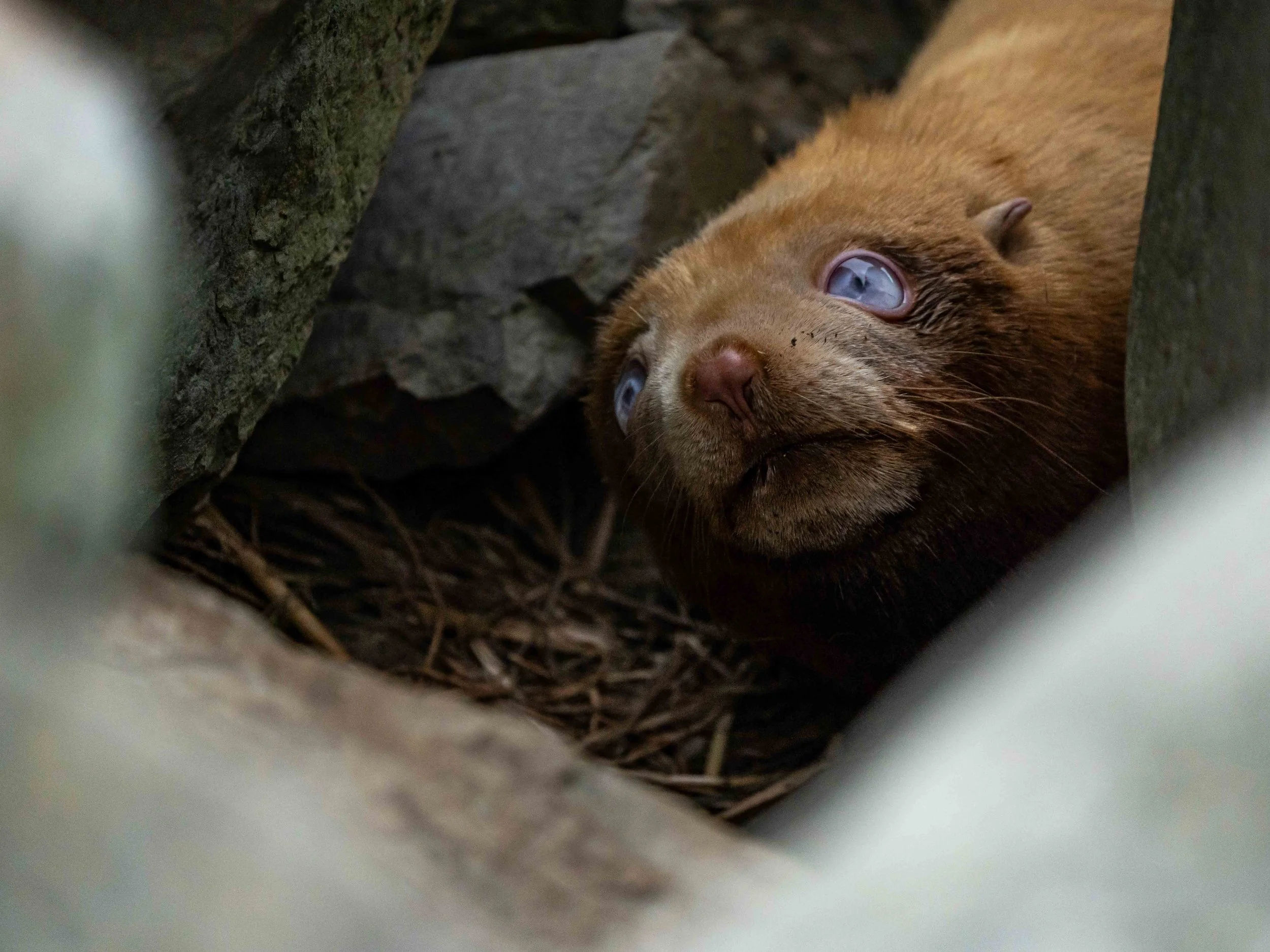
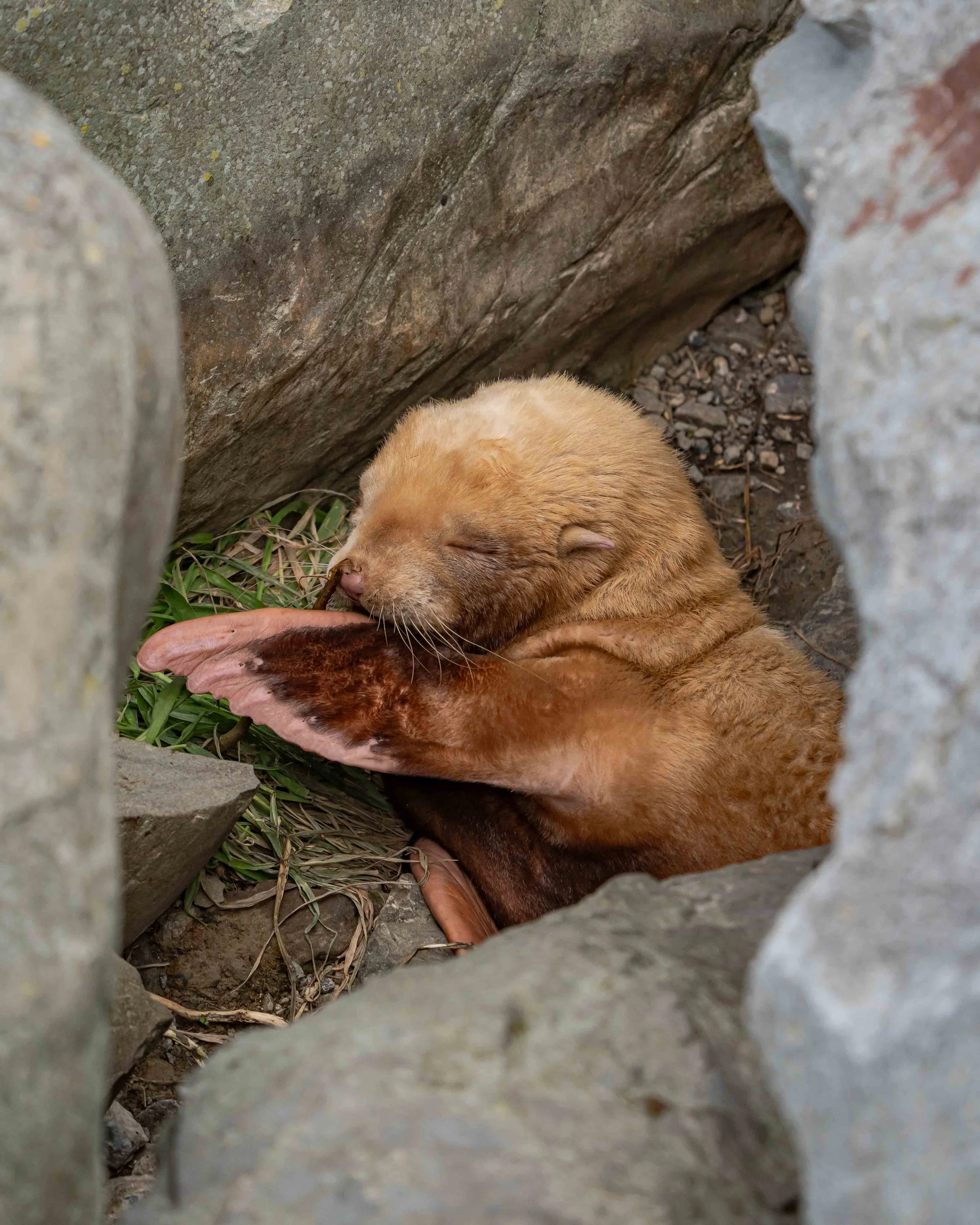
Albino animals can struggle to survive as its eyesight may not be as great as other animals, it may also be more prone to predation due to its distinct colouring. It is unknown how well this pup will survive as it grows older and importantly if it will be accepted by the other seals in the colony. As a young pup, he appears to be well fed by its mother and plays well with its fellow seal pups.
Only time will tell whether this young and unique seal will make it to adulthood and have offspring of his own. Male fur seals tend to have a harem of females and will often return to a similar area to where he was born. Will we see this male standing proud with a harem of females on his side? Unfortunately the mortality rate of fur seals are high and they do not all make it to adulthood, my hopes are that this young seal will be seen in the future and grow into a large and healthy male fur seal.
There are very few albino fur seals on record. One of the more recent records was in 2020 when an albino fur seal pup was discovered on the remote island of Tyuleny in the Sea of Okhotsk, Russia by Vladimir Burkanov. This female fur seal did not appear to be accepted by the rest of the seals in the colony and was eventually taken into captivity to a dolphinarium in Russia.