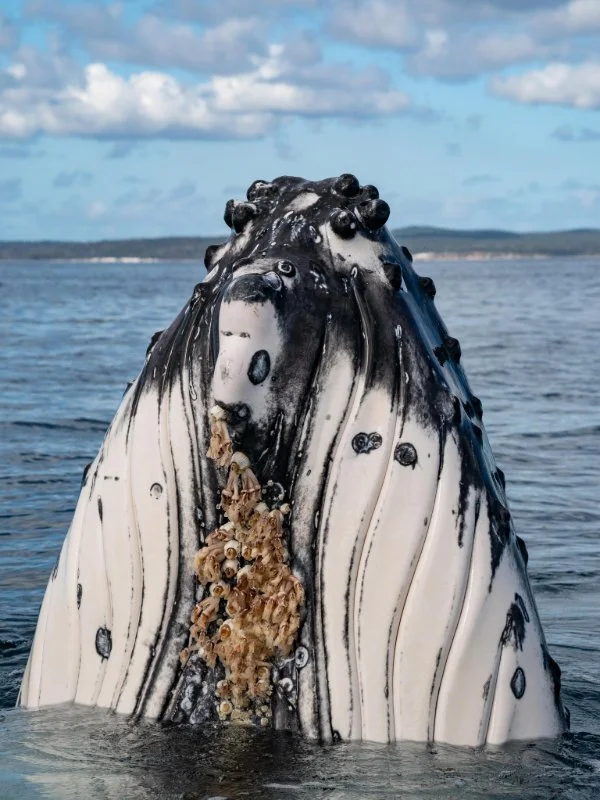
The face of a humpback whale
Every year, humpback whales go on long migrations between the cold, nutrient-rich feeding grounds of Antarctica and the warmer waters off the east coast of Australia where they give birth, breed, and socialise. Over the course of three humpback whale seasons, I have had the privilege to work in Hervey Bay, Queensland, where the humpback whales come into the shallow and sandy waters of Platypus Bay. Here, we observe the whales and spend full days looking at curious juveniles do ‘muggings’, a term that describes inquisitive whales coming close to boats. While a mugging is happening, a whale may also lift its head out of the water in a so-called ‘spy hop’. This is a way for the whale to get a closer look at its surroundings, often spinning around in a pirouette as its eyes are located on the sides of its face. That feeling you get when a whale lifts its face out of the water, right next to the boat, locking eyes with you as it spins around, is exhilarating. Once you start to see the whales up close, you start to take note of certain things. The first time I got a close look at the face of a humpback whale and that first wave of excitement subsided, I was amazed to see what was actually there.
Over the last 9 years, I have had the incredible opportunity to view and photograph whales on a daily basis through work. For three years I had the pleasure of working alongside marine mammal veteran of over 35 years, Peter Lynch onboard Blue Dolphin Marine Tours in Hervey Bay. Humpback whales are the main species of whale encountered there and visitors keep getting blown away by their extraordinary behaviour in the bay. With camera in hand, I have managed to capture some of these incredible and close encounters. It did not take long for me to be completely amazed by these whales, on day three, I had my first close interaction with a humpback in the bay. A pod of juvenile whales approached the vessel and one individual instantly carried out a spy-hop, seemingly investigating us. As I sat down at the end of the day to go through my daily images I started to look closer at the face of the humpback whale.
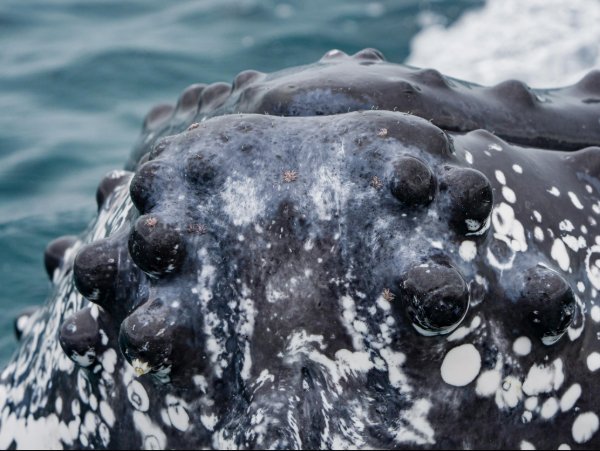
When you take a closer look, a humpback whale’s skin is covered with tubercles, big bumps found on their face, as well as barnacles, small crustaceans that make their homes on marine wildlife. In addition, you can usually spot various scars. On closer inspection, however, there is a lot more going on. As humans and whales are both mammals, we have many things in common. We share several characteristics; we require oxygen, are warm blooded, give birth to live young, give milk to our young, and another one is having hair. This might be something many people do not consider thinking about whales, that they have hair.
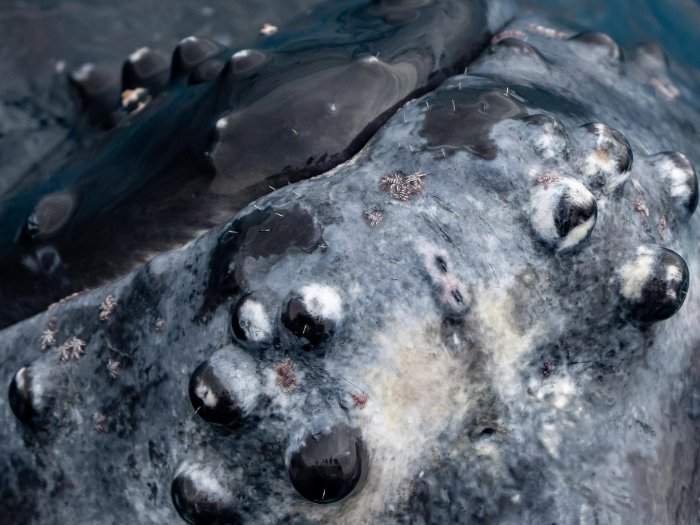
Close-up view of the hairs and lice on the face of a humpback whale
Whales once shared the land with other terrestrial animals, but they ventured back into the ocean about 50 million years ago and adapted to a life at sea, I learn from Lynch. After returning to the sea, they lost their thick fur to become more streamlined in the water. This is also why the nostrils (now blowholes) of whales moved to the top of the heads making it easier for them to surface for a breath.
For most cetaceans, the hairs they are born with usually fall off as they grow older. This is not the case for humpback whales. Although they do not have a lot of hair in comparison to humans, for being a whale, humpback whales are the hairiest of them all. They have a strand of hair in each tubercle and a few more spread out across their face or their rostrum. These strands of hairs do not come in different colours, they are all translucent-blonde. These hairs are quite sensitive and can aid the whale's senses and assist in navigation. Dr Barry McGovern, whale researcher says, “Tubercles on the head contain a hair follicle and lots of nerve cells. We don’t fully understand what they are for but the general thought is that they are a type of sensory organ. They may detect vibrations in the water, temperature changes, or might be used to assess the density of prey in the surrounding water helping the whale decide to open its mouth or not, a very energetically costly movement” .
In addition to hair, there is more to see. There are miniscule animals that make themselves at home on their rostrum, such as small sea lice. Most whales have a small healthy population of lice or sea louse. They tend to live along the very front of the rostrum and there can be dense clusters of them. A whale can tolerate some lice on their body but if the population is too great, it can get extremely heavy and make the whale less streamlined in the water and in effect, slow the whale down. If a whale gets sick, injured or is a slow-moving individual, the population of the sea lice can grow exponentially, and the whale could get fully covered in lice.
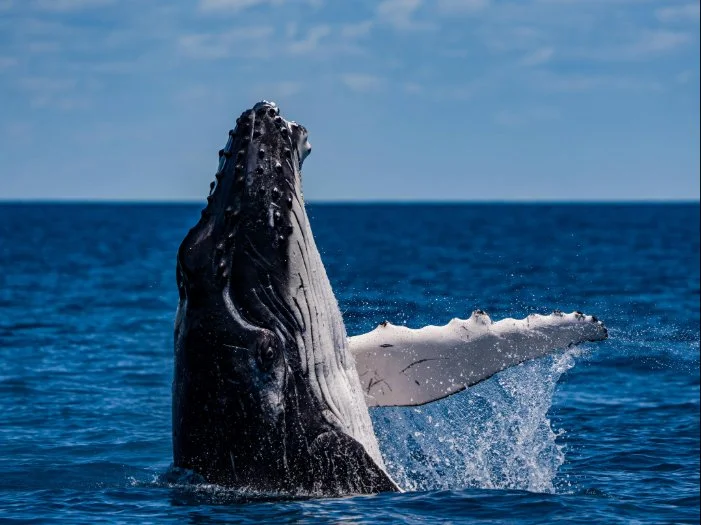
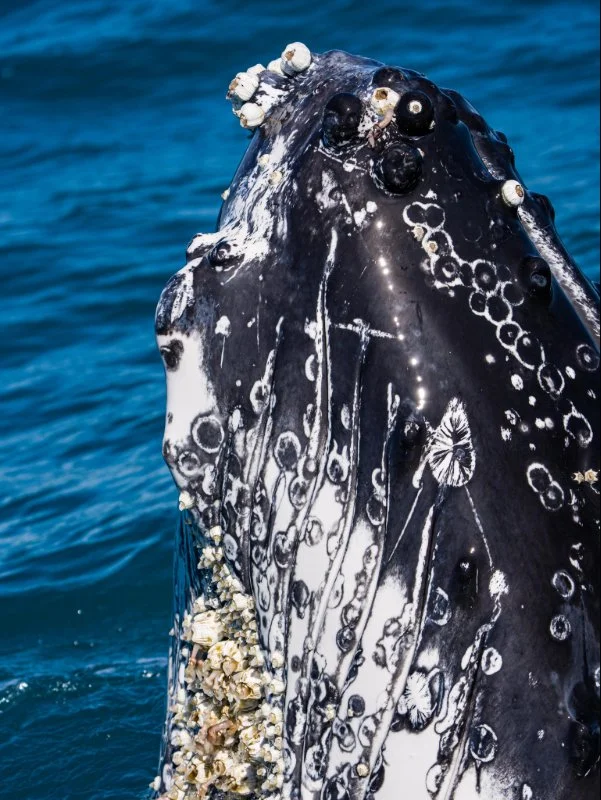
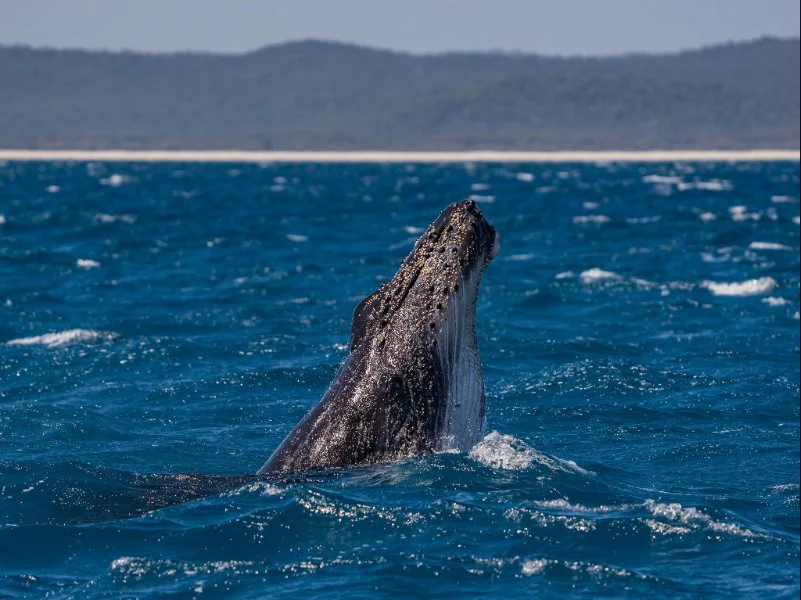
The humpback whale is a relatively slow moving animal and lives in close proximity to the surface. This creates a great home to various species of barnacles. As the whale moves slowly through the water, the barnacles can attach themselves and live on the whale where they filter feed with their tongues and feet throughout their lives.
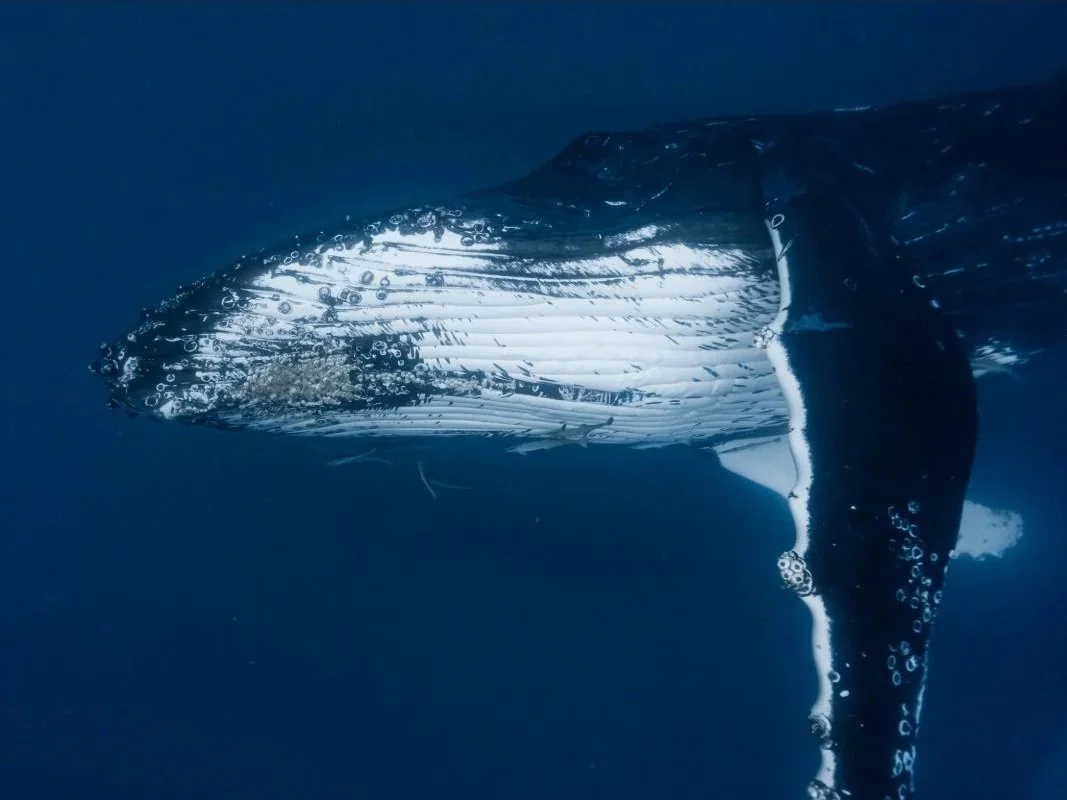
Humpback whales are also filter feeders, feeding on small pray such as krill, plankton and small schooling fish. By opening their mouth wide, they take great amounts of water, containing their prey and use their baleen plates as great strainers to filter out the water through their plates. During their migration, they typically do not feed so it is quite rare to see their baleen plates in these warmer waters. It was therefore particularly impressive to see this energetic whale opening its mouth wide while performing a head lunge, revealing those plates in its upper jaw.
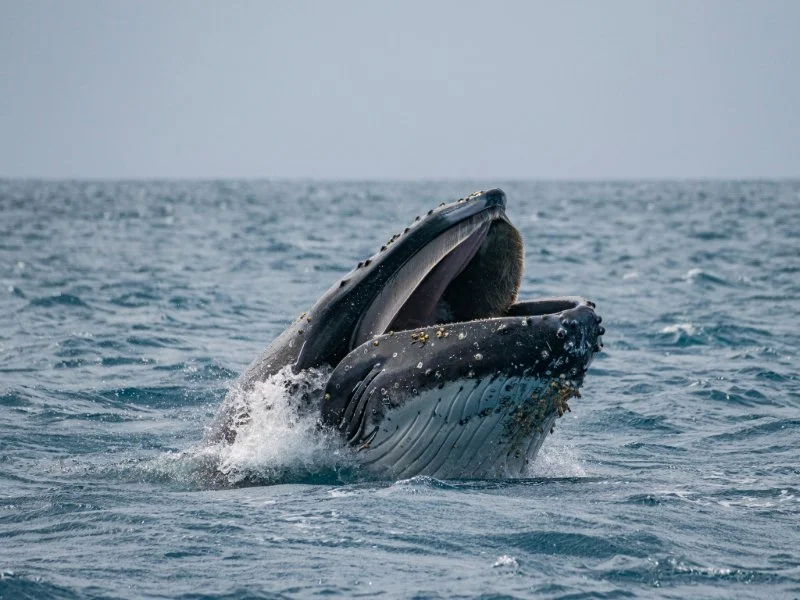
A juvenile whale opening its mouth while performing a head lunge
There are a few different species of barnacles that can be found o the whale’s skin, the most common ones are the acorn barnacles, which can be found in great congregations, especially around their rostrum and on their ventral pleats. At times, the acorn barnacles get attachments on themselves, these are the gooseneck barnacles, who specialises in attaching themselves to acorn barnacles. “Humpback whales are especially associated with the specialised acorn (Coronula diadema and Coronula reginae), as well as gooseneck barnacles (Conchoderma auritum) which are epizootic on C. diadema. A third observed species is the stalked barnacle, (Xenobalanus globicipitis), which commonly occurs on the trailing edge of the dorsal and tail fluke", says Isabel Taylor, Bachelor in Animal Ecology.
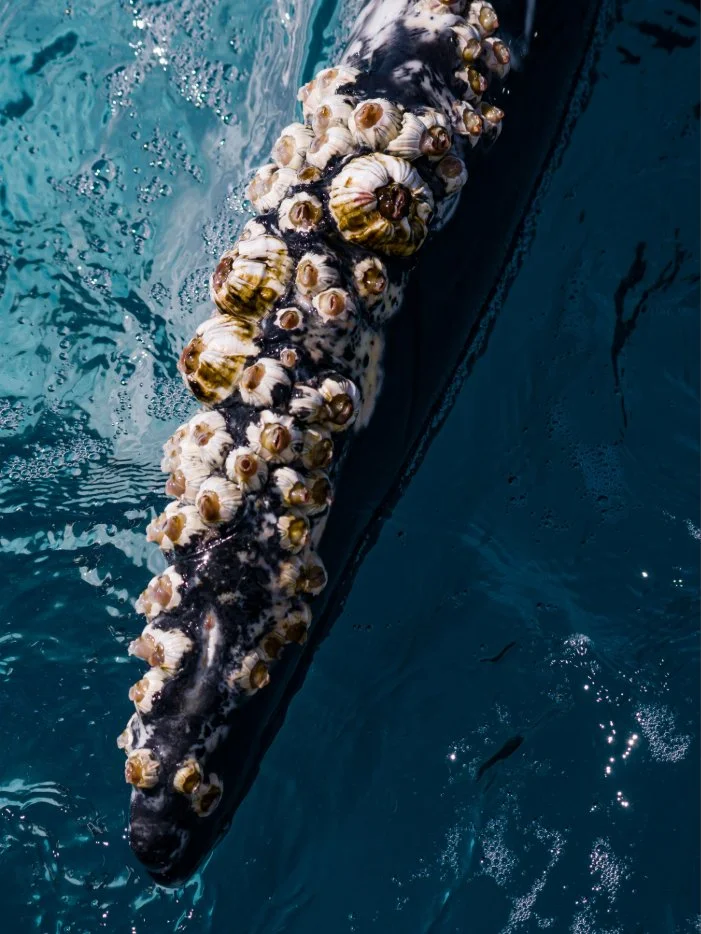
Close-up view of acorn barnacles “Coronula diadema and Coronula reginae”
From a very young age, barnacles may be a part of a whale’s life, the calves can already get barnacles shortly after being born. A young calf could be only be a few weeks old, already covered in barnacles. Whereas some young whales take a lot longer to get barnacles and may only have a few. So why keep the barnacles? Why not get rid of them? Having barnacles can be advantageous, not only to the barnacles but even the whales. Some believe that barnacles can be useful tools in fighting between whales, especially males. “Researchers have posited that the barnacles may assist in combative attempts to win a mate among competing males. However, high burdens may present potential energy expenditure costs due to increased drag”, says Isabel Taylor. Humpback whales are extremely powerful animals, having the longest pectoral fins of any of the whales. Their scientific name; Megaptera novaeangliae translates into "big-winged New Englander", which describes them exceptionally well. The pectoral fins can reach one third of the whale's full body length. With a full size of up to to 16 metres, their pectoral fins could reach five metres in length. It is estimated that a mature humpback whale could host as much as 500kg of barnacles.
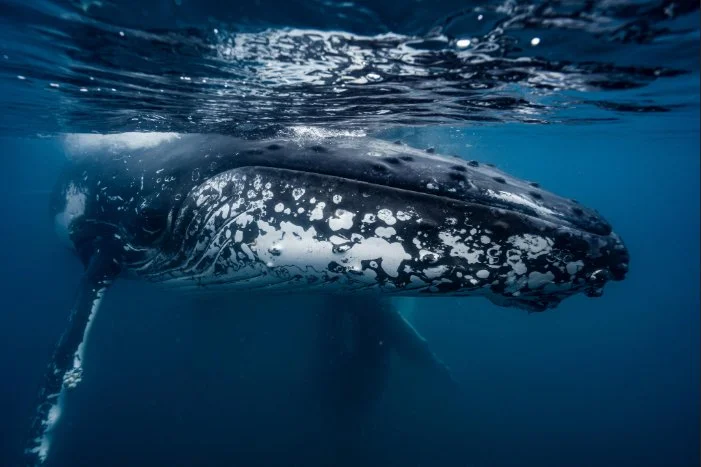
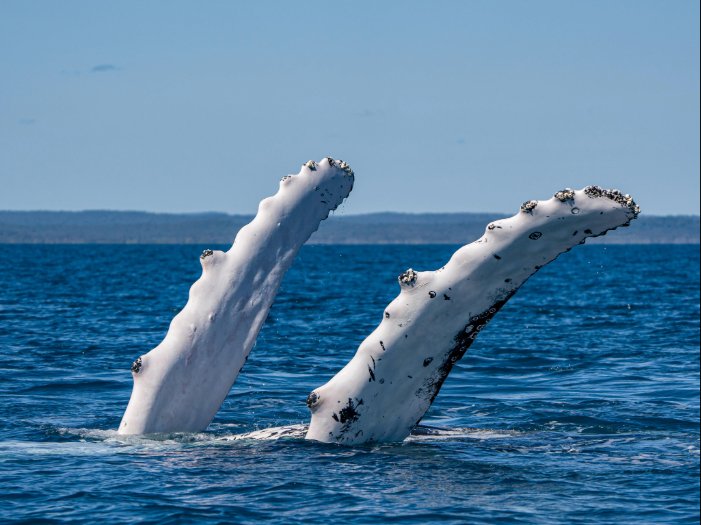
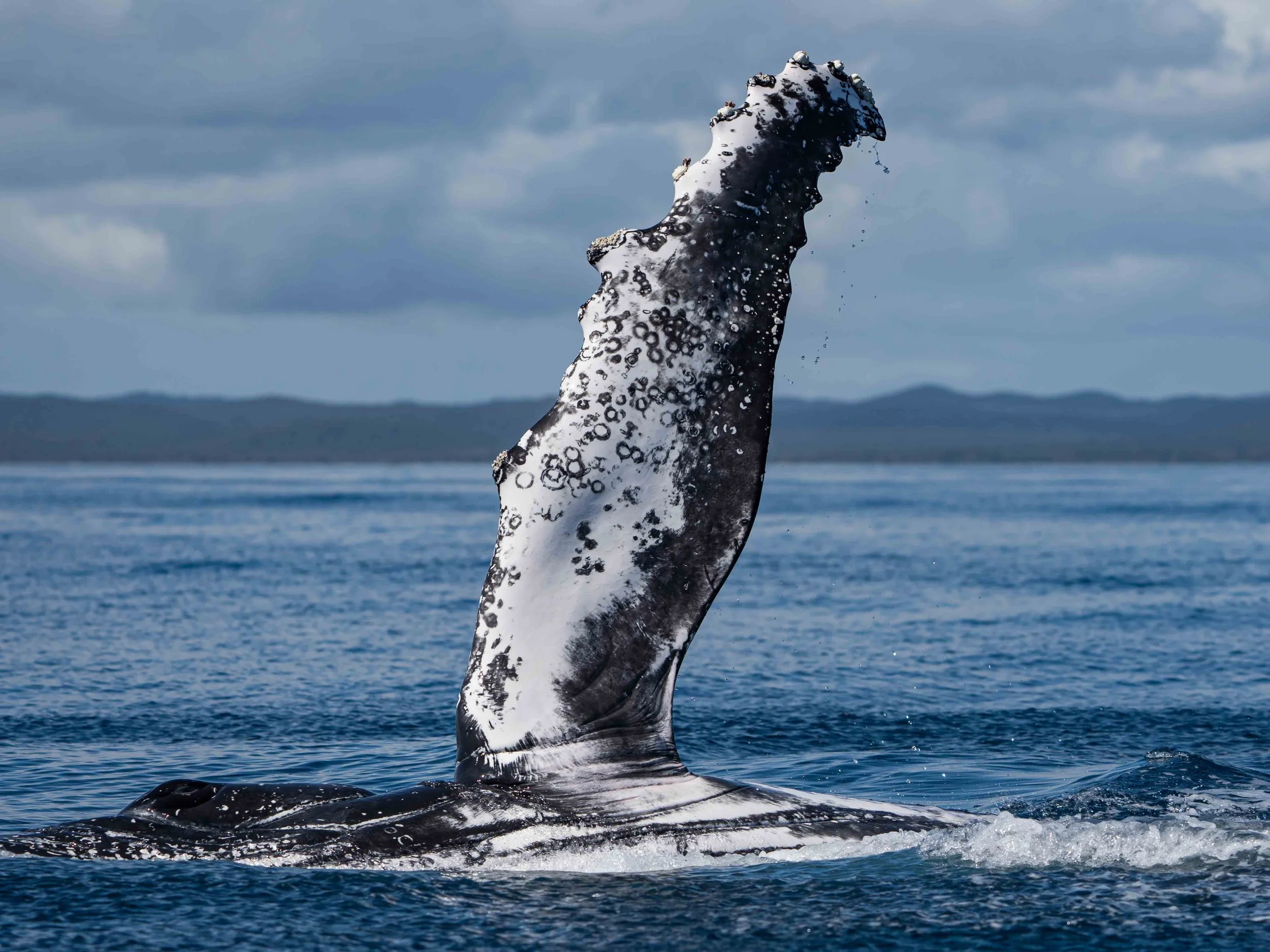
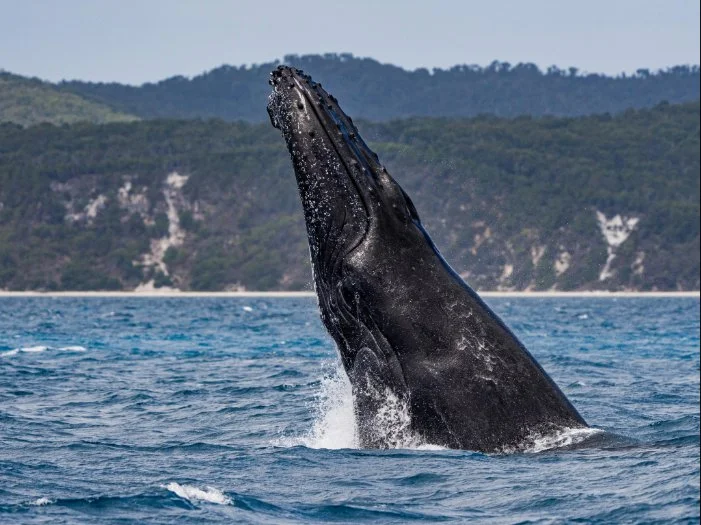
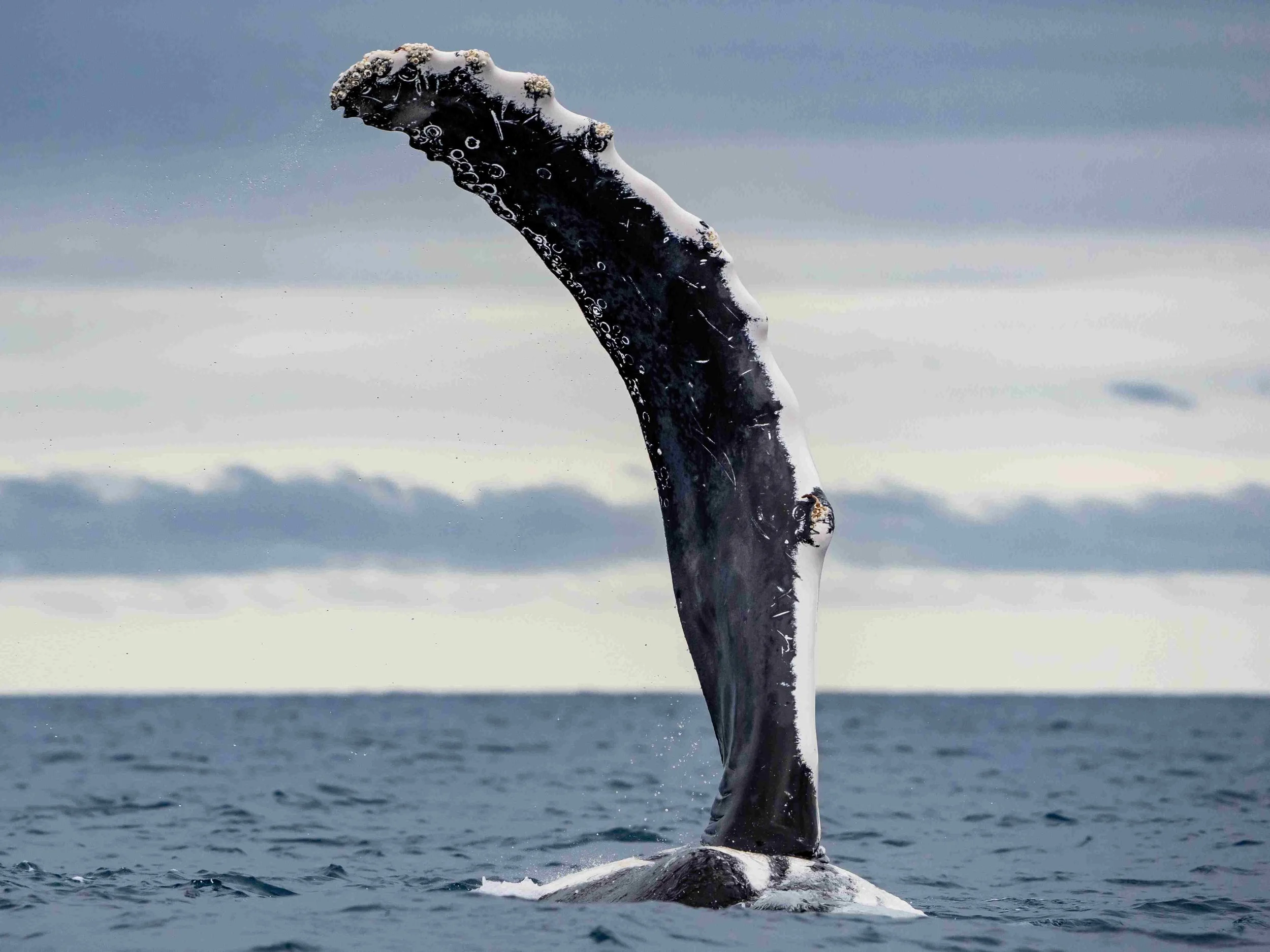
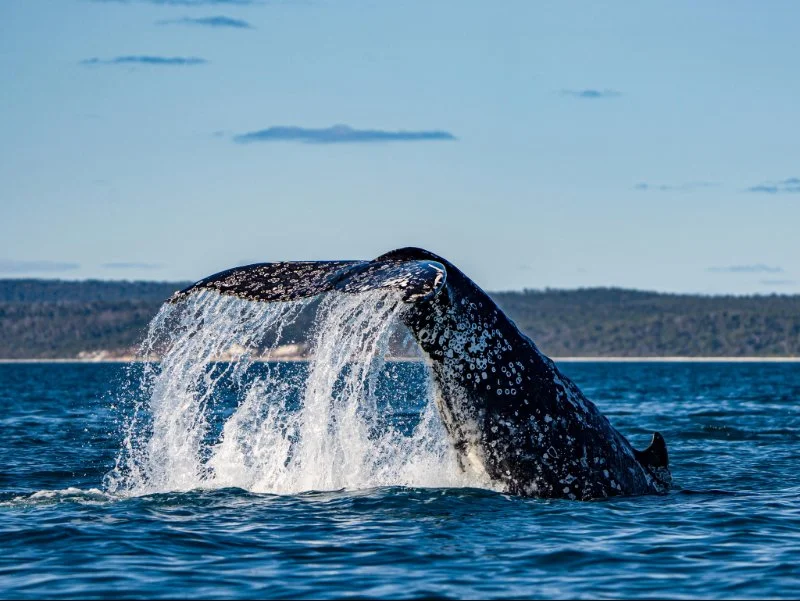
There are multiple reasons why whales migrate, including mating and birthing. It is also a great way to rid the skin of parasites and some barnacles. As the whales migrate from cooler into warmer waters, some barnacles can fall off as the sea temperature changes. When these barnacles fall off, they often leave a scar behind. If the barnacle sat on the black skin of the whale, it scars white, and it does the opposite on white skin. For whales that have had numerous barnacles fall off, they can have the most intricate pattern along the skin. A young male that was almost fully black have had a vast amount of barnacles in the past and was covered in these magnificent white circular patters all along his peduncle and tail fluke. It makes for a stunning sight and shows only a portion of what a whale has experienced in its life. “I think it is incredible to see the different ring patters along their face that the barnacles leave behind. On such a large animal, you can see so many details on its face, they are all uniquely different”, adds Peter Lynch.
Circular barnacle scars
Researchers commonly use markings on their flukes to help ID individual whales, each pattern and trailing edge of a fluke being unique. It is not only the fluke that can be identified, each pectoral fin and dorsal fin are also unique to a whale and can aid in identifying individual whales. With help from Happywhale, an international citizen science project, researchers from all over the world can contribute with fluke images and share information across oceans. Through this, we have learned much about the movements of humpback whales and how different populations are connected.
I am a regular user of this shared website and have had some incredible matches throughout my years of photographing humpback whales:
Annika Dahlberg profile Happywhale
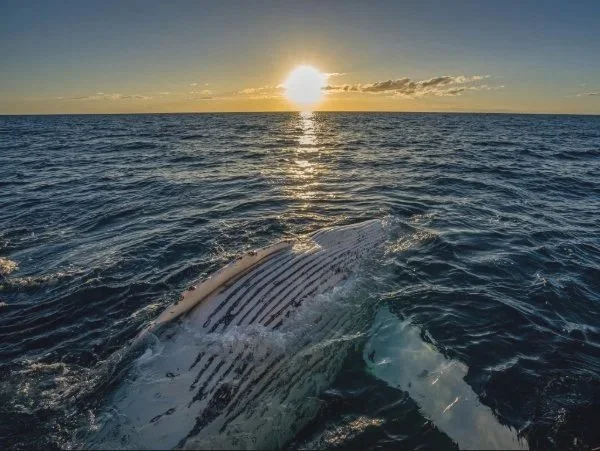
Looking back at my time out with the whales, there are many moments that stand out to me. One of those special moments was early in the season and in the middle of winter when the sun sets early in the evening. The sun is just about to dip below the horizon, two humpback whales circle around the boat. In a curious display, one of the whales performs a slow spy-hop, then sinks below the surface and exposes its white underside, which is distinctive for the Southern Hemisphere humpback whales, with its great pectoral fins out.