
Orca / Killer whale & Blackfish
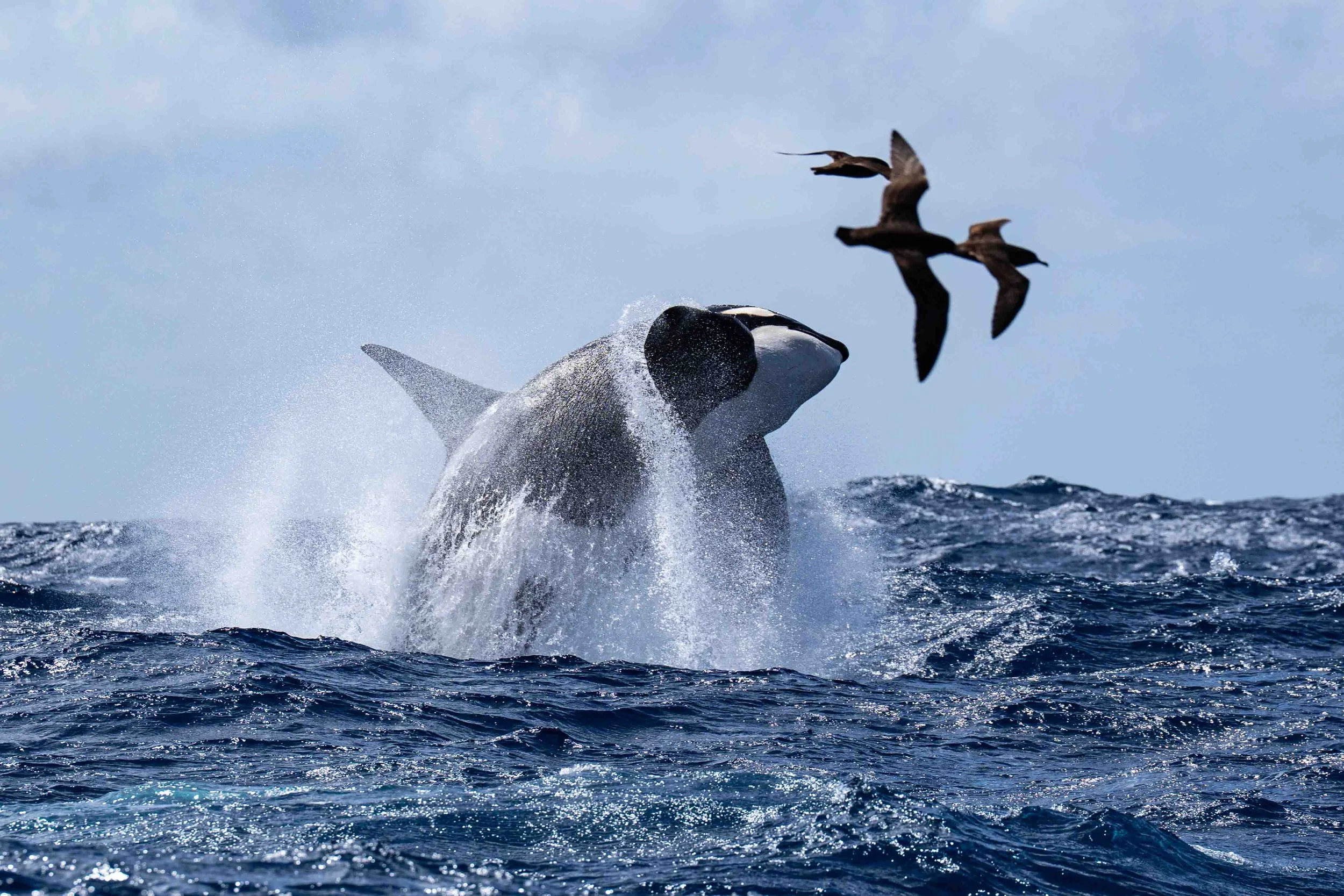
Male orca breaching in Bremer Bay, WA, Australia
I wrote this original story many years ago and I have since been fortunate enough to encounter several different orca, especially in the Southern Hemisphere. I therefore thought this would be a great time to update my original story and add some of these encounters of other eco-types of orca. I would like to start off with addressing their name, a hot topic in the whale world. They are known as both orca and killer whale and I happily use both. For some reason, many believe it is wrong to call them killer whales. I am not exactly sure why this is, as they are the top predator in our oceans and they kill whales! (in some areas), which is how their name came to be “whale killer”. They are one of the few animals in the ocean that can successfully take down a whale! That is not an easy feat and I have been fortunate to witness this myself, pods of killer whales taking down a blue whale - that largest animal to ever live on our planet. If an animal is capable of doing this, I think they have more than earned their right to be called killer whales. Their scientific name “Orcinus orca” means “demon whale” or “of the kingdom of the dead”, which follows a similar path that the name killer whale does. You can call them either, they are both right! For the simplicity of this story though, I will refer to them as orca.
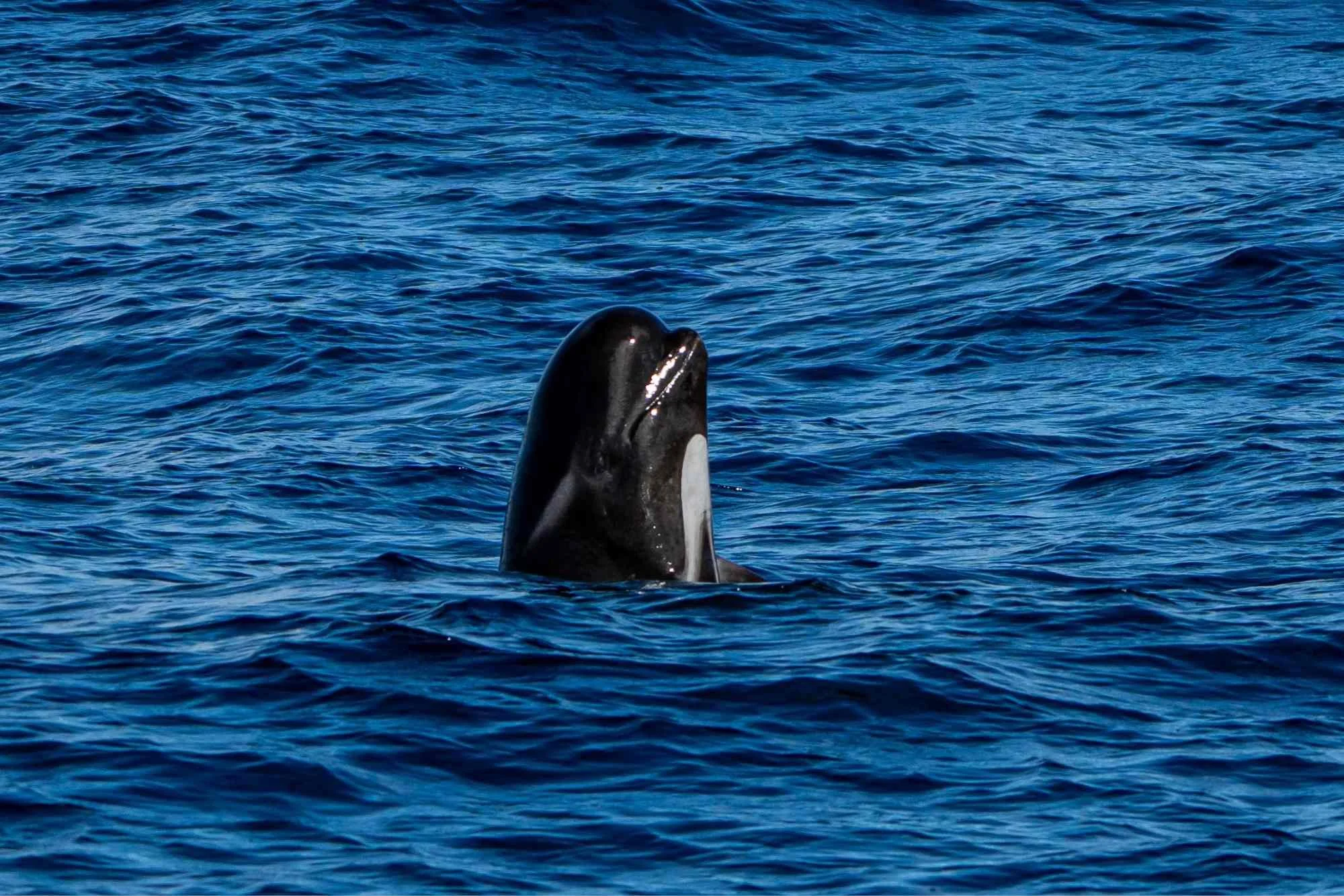
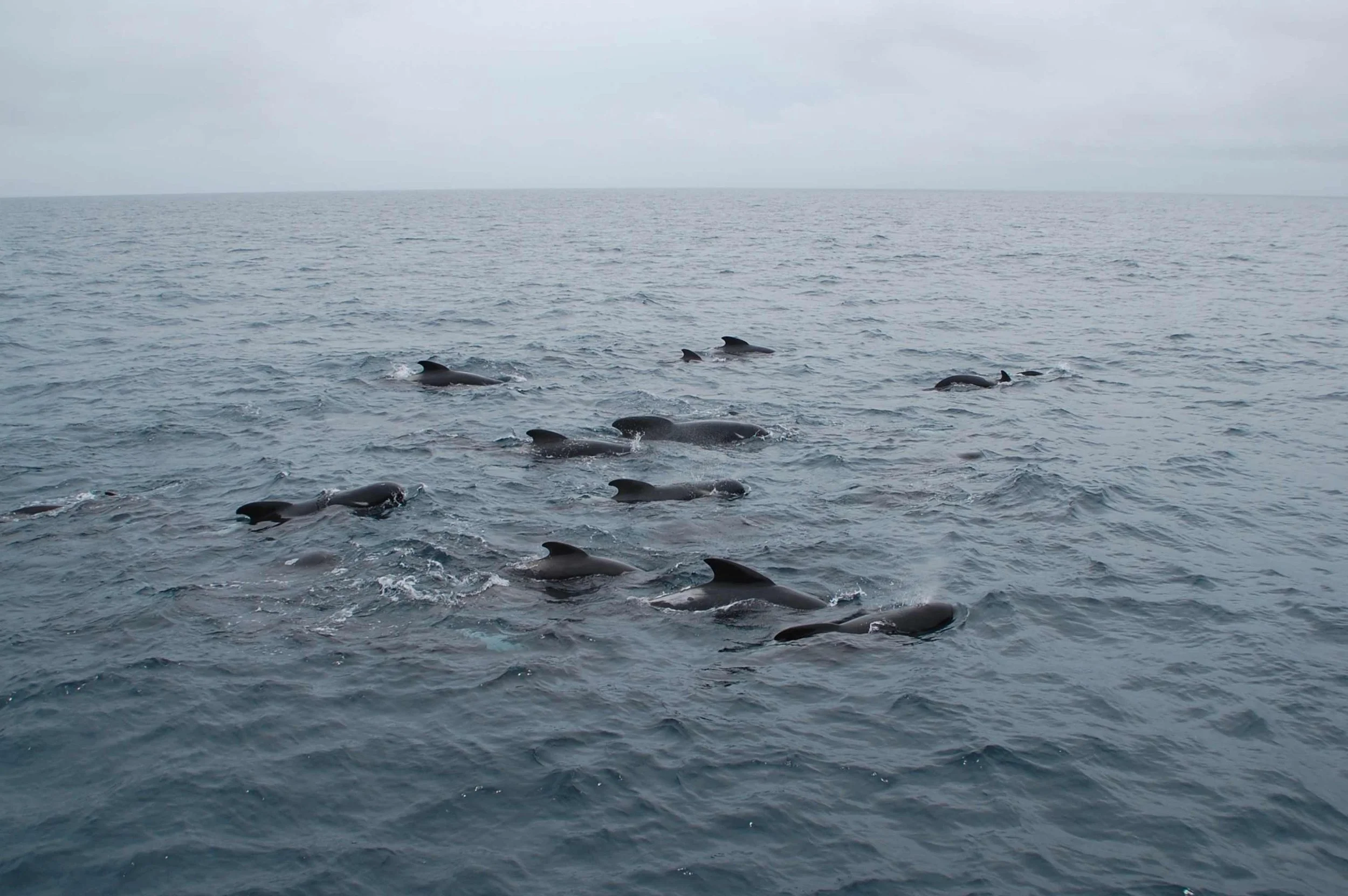
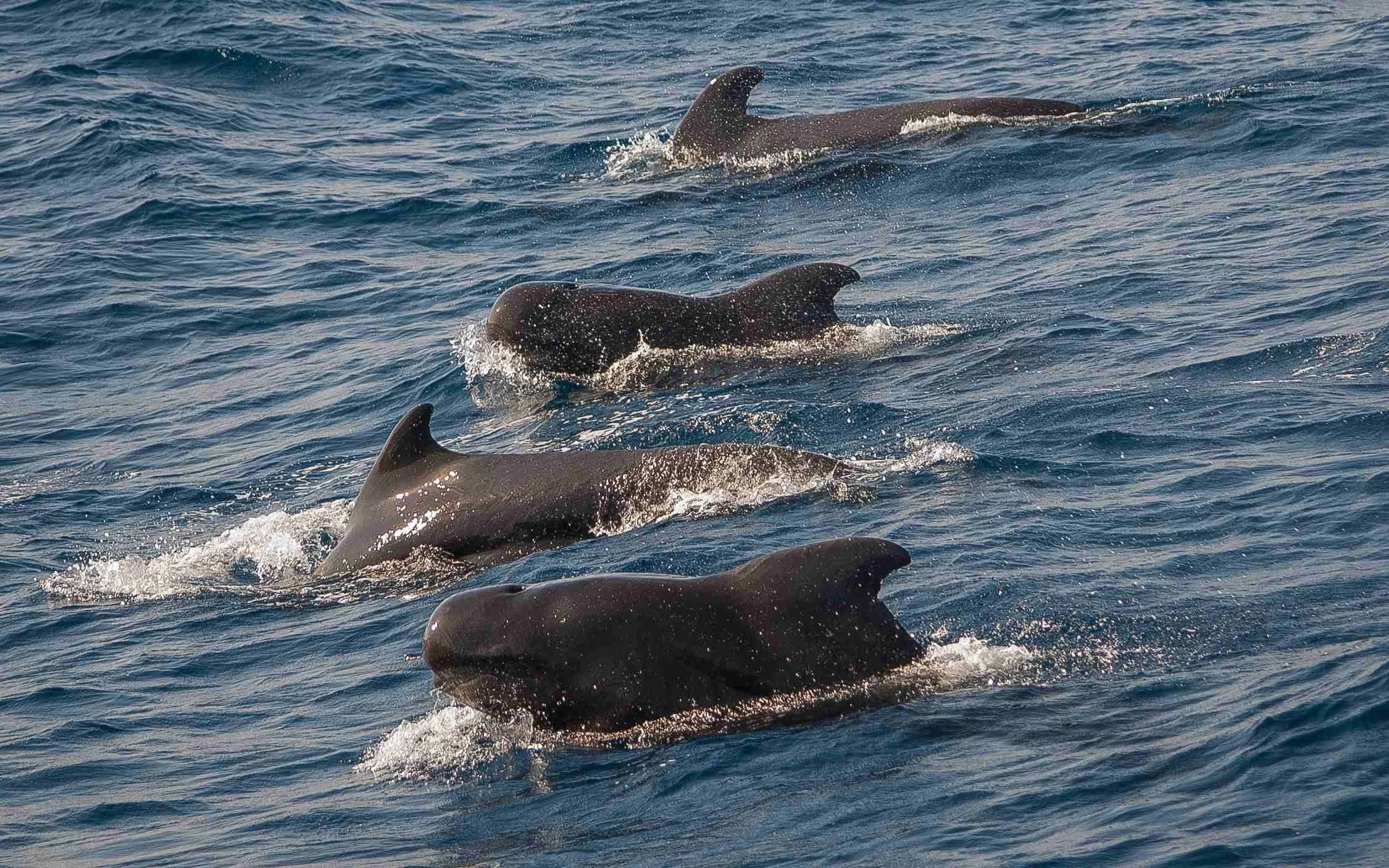
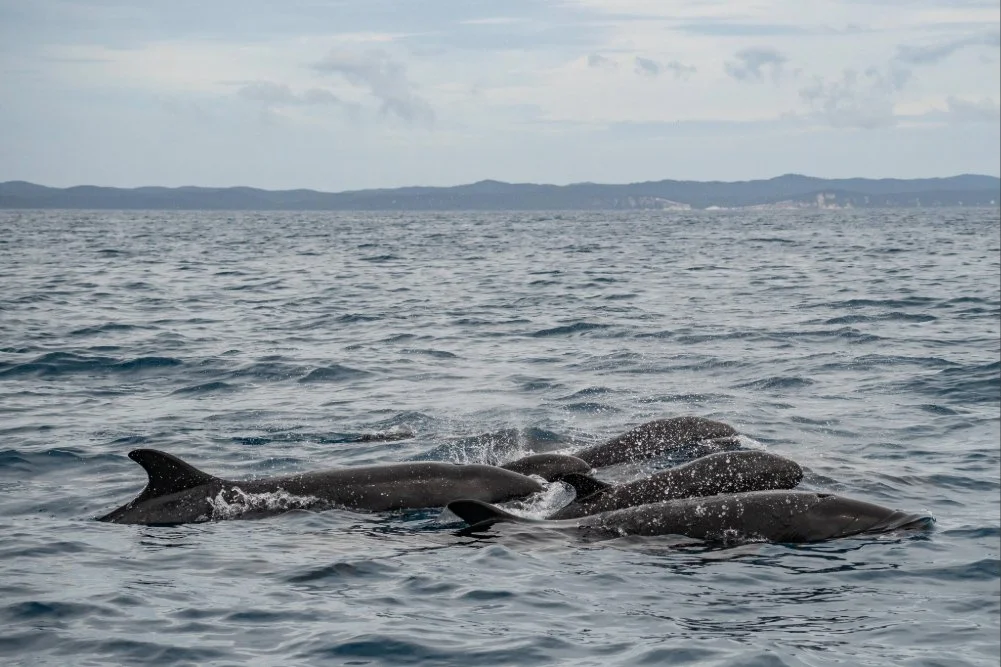
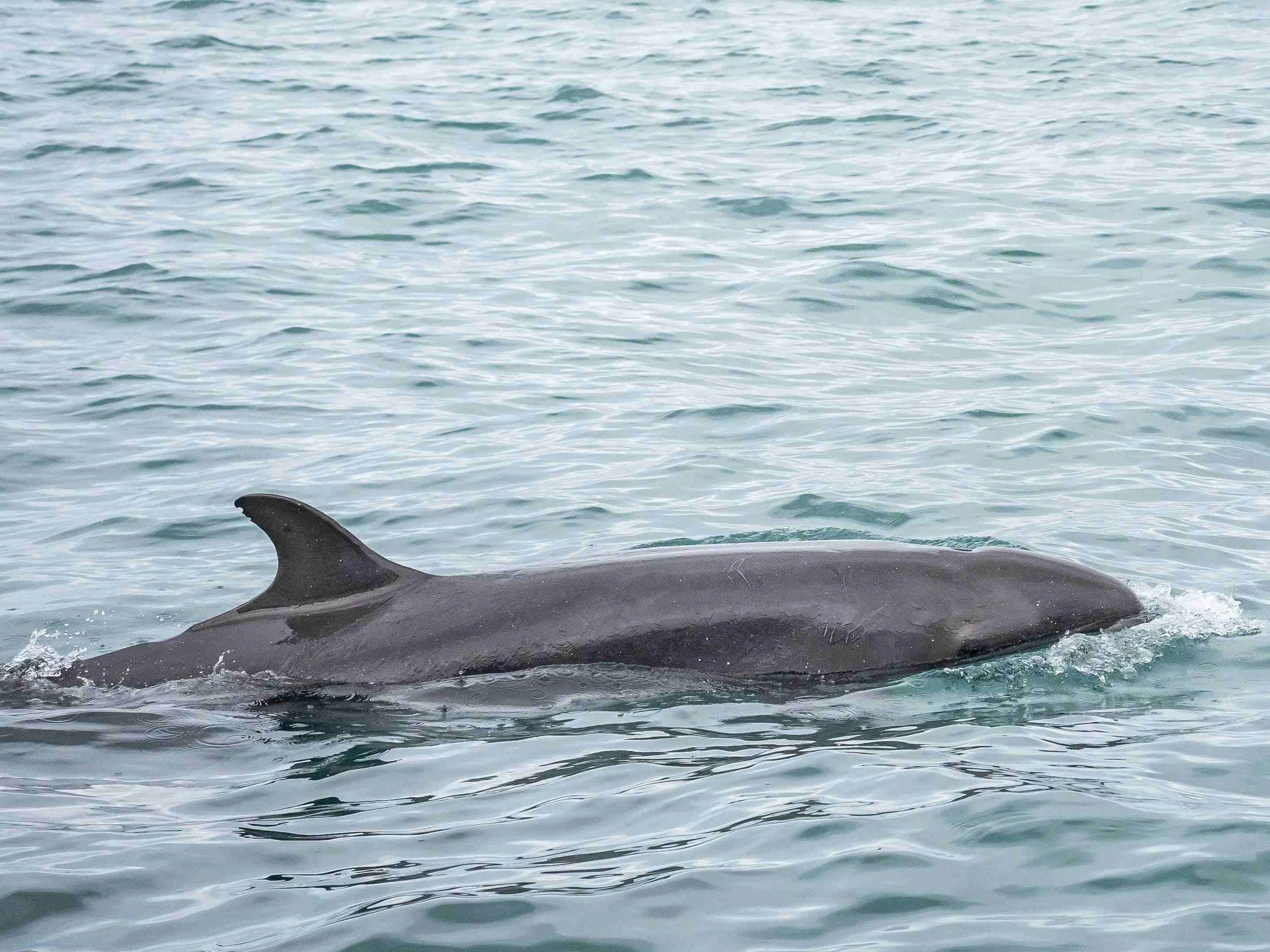
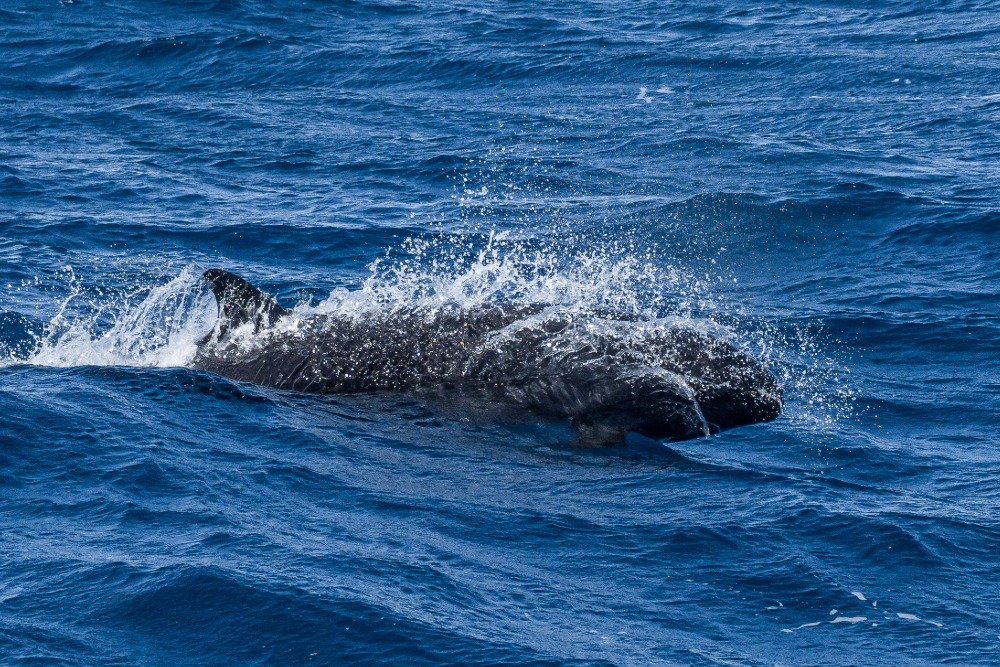
They are one of the species known as “blackfish” along with others, such as; pilot whales and false killer whales. They are all dark or black in colour and viewing them from the surface, many of them might look extremely similar. Pilot whales have extremely strong family bonds and are notorious for strandings, especially in Aotearoa/New Zealand. I have been fortunate enough to see long-finned pilot whales in New Zealand and in Australia and short-finned pilot whales in Mirissa, Sri Lanka. The false-killer whales look quite different from killer whales but have a similar skull structure, they can be very rare to encounter. While working in Hervey Bay, Australia I was fortunate enough so encounter large pods of false killer whales, as they visit the bay a few times a year. I was also lucky to see a select few in Bremer Bay, Australia.
Orcas can be found in all our oceans around the world but they are extremely different depending on where you encounter them. There are different eco-types of orca, they feed on different prey and they even look different. They tend to specialise in the food that is available in the area that they are in. I am going to start with the orcas that are very special to me and those are the ones found in Aotearoa/New Zealand.
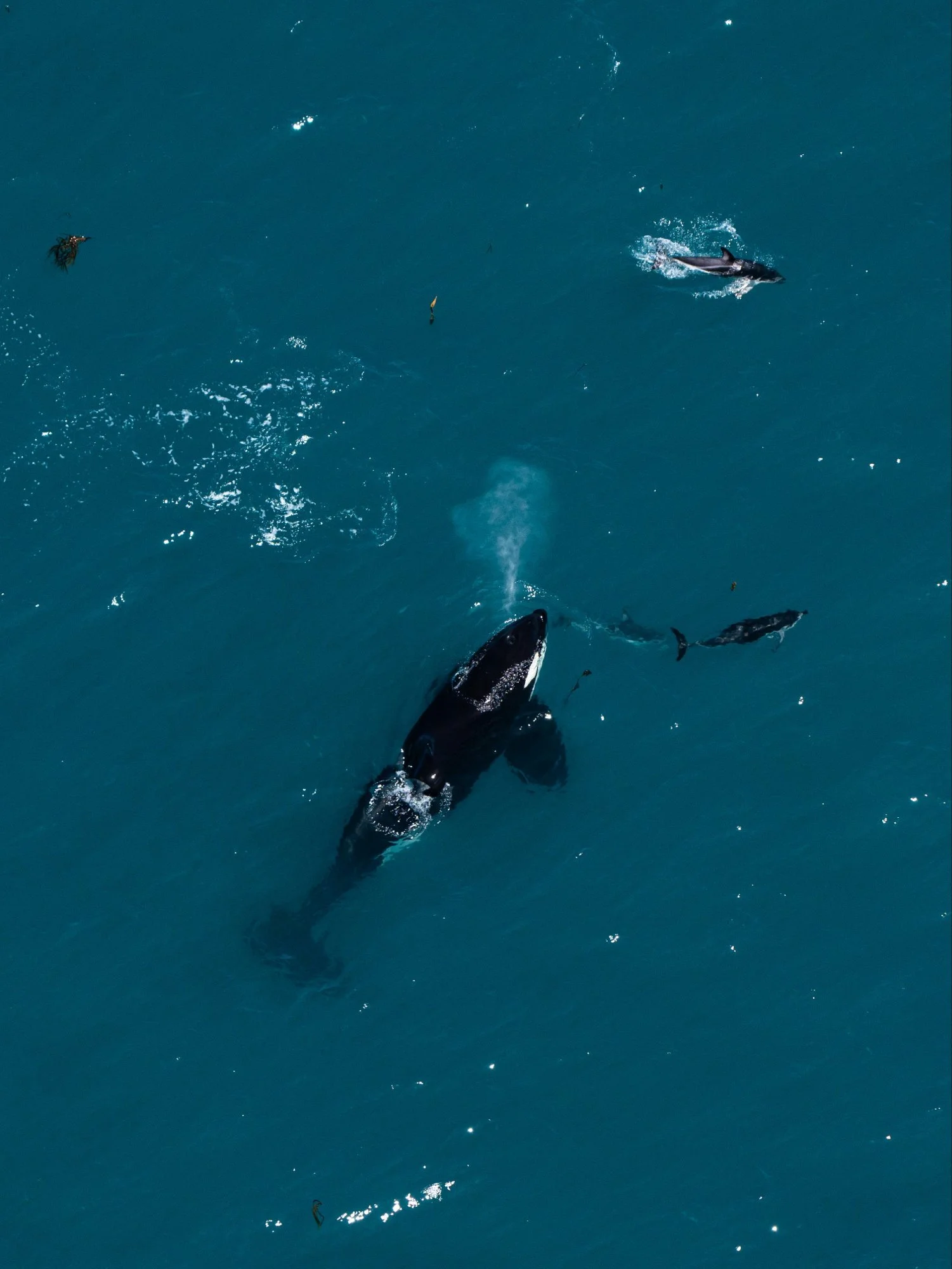
These orca have a very special diet and feed mainly on stingrays and sharks! You might also see them feeding on various species of fish and on the odd occasion, they may turn on the local dusky dolphins, although this is super rare and barely recorded. Many local orca are often accompanied by dusky dolphins and they are generally speaking - not on their menu.
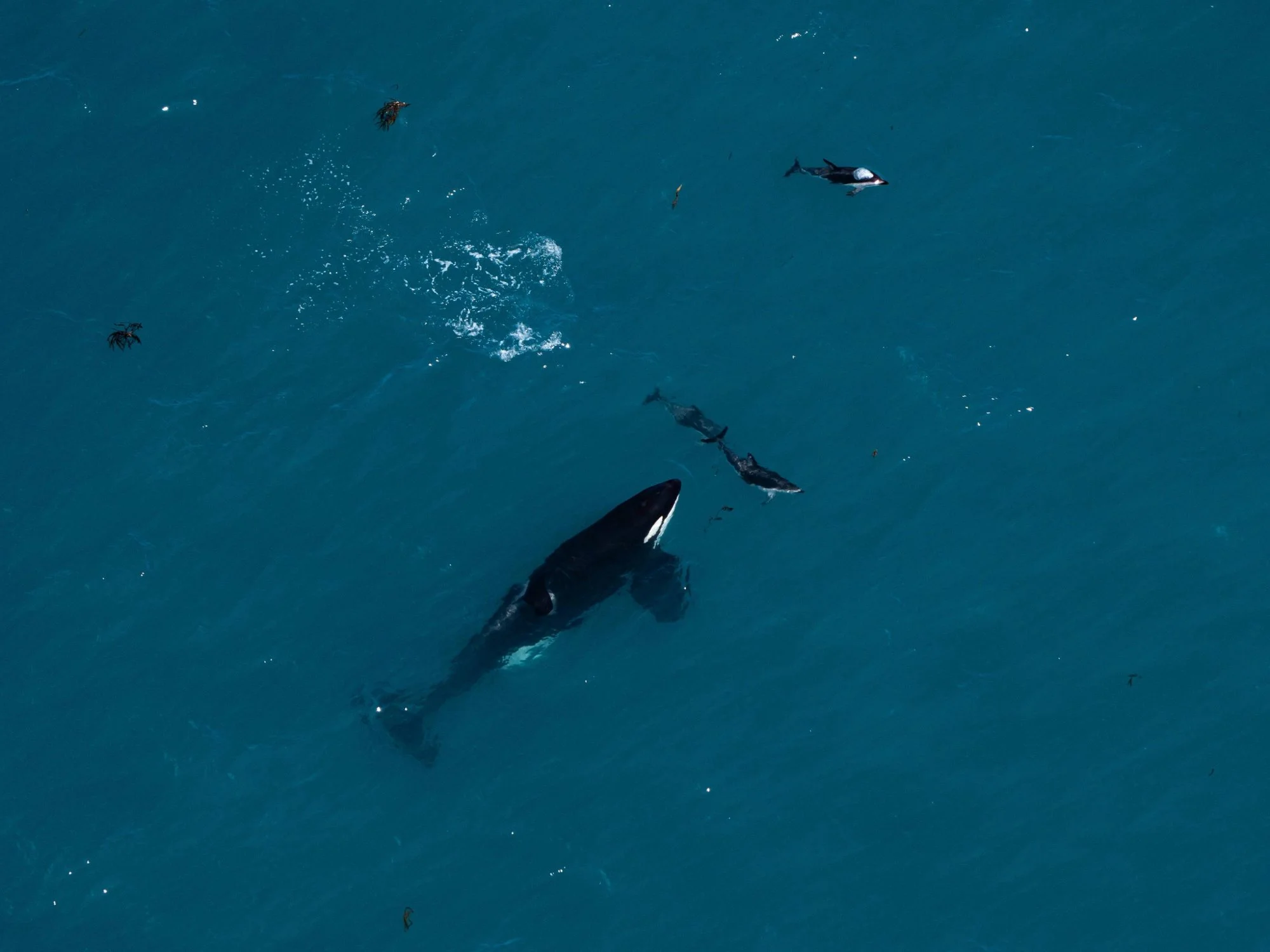
Male NZ orca
Swimming with the local dusky dolphins in Kaikōura
If you flip a shark or a ray (most of them) upside down they enter a state known as tonic immobility, a technique orcas use in the coastal waters of Aotearoa. They tend to swim upside down as they approach a stingray, pick it up from behind and flip it over. It is now an easy catch which they can share with the rest of the family!
I spent years living in Kaikōura on the South Island and there is a deep underwater canyon close to shore, the Kaikōura canyon. As the orca travel along the shelf of the canyon, I often see them feeding on sharks, especially small blue sharks. They use their large tail to slap onto the shark in order to stun it and they can be seen swimming with the shark in their mouths.
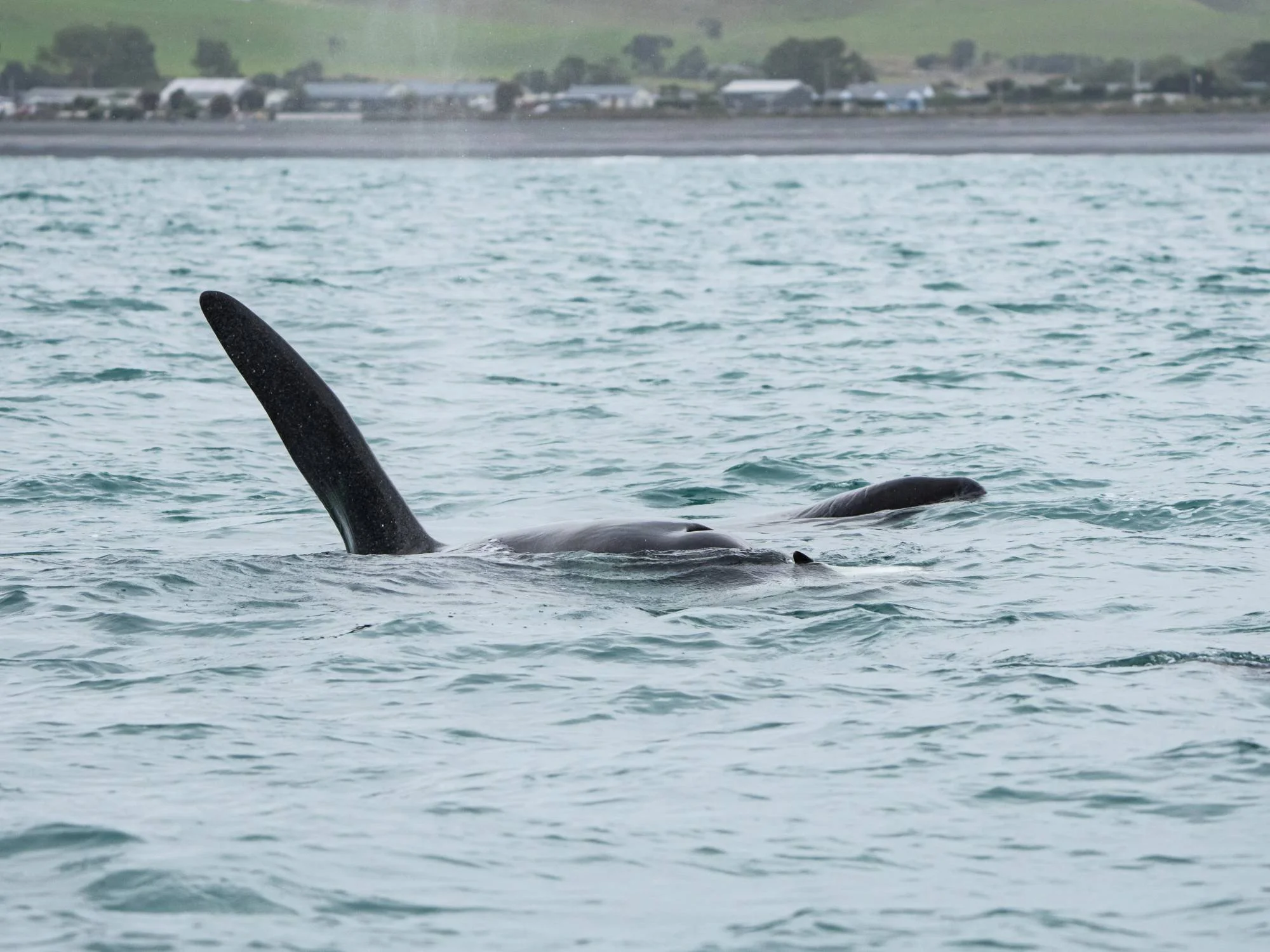
A shark has become the unfortunate prey of this large male orca
Orca will always be one of the top species for me to encounter. As they often feed on stingrays in Aotearoa they tend to be very coastal and you can often see them from shore. Depending on the pod and what they are feeding on, they can spend hours in town as they continue to forage for food around the peninsula. They even come into the small marina/harbour of Kaikōura, right next to where the boats launch from as they are searching for food. A memorable time was in January 2025 when a pod stayed in town for a whole day and it appeared as if the whole town came out to see them! It was impressive to see everyone come together to witness these incredible animals hunt and socialise.
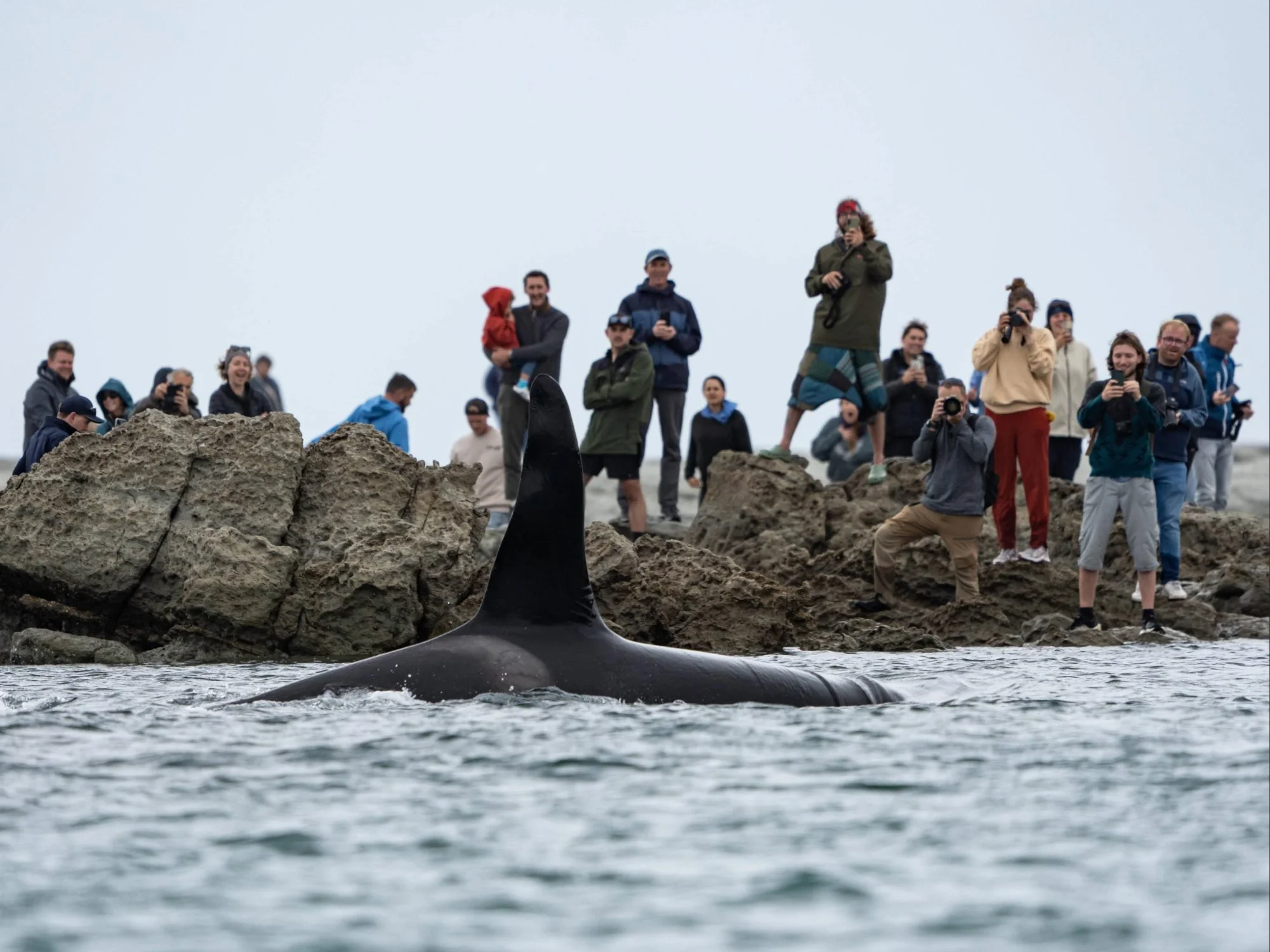
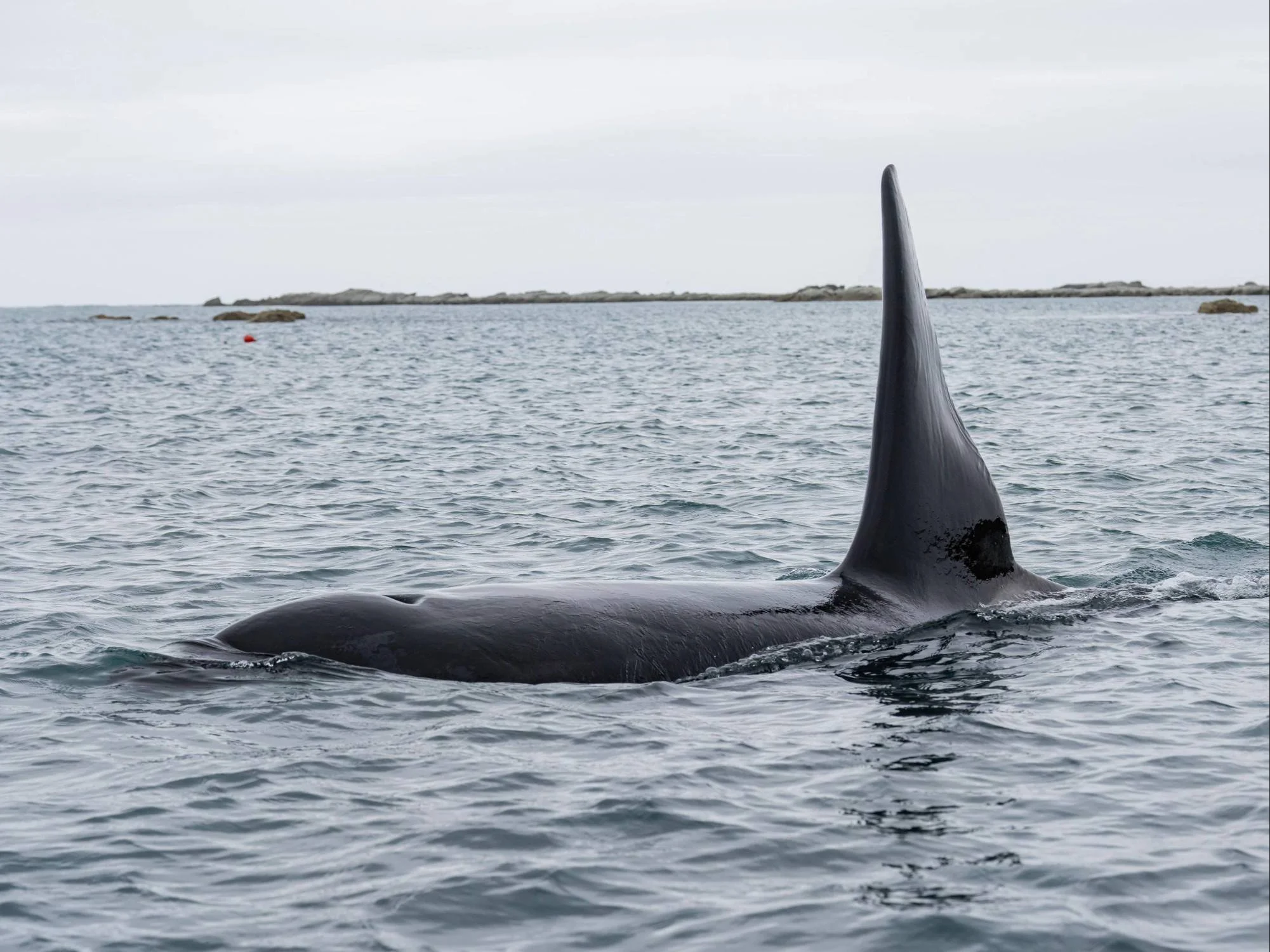
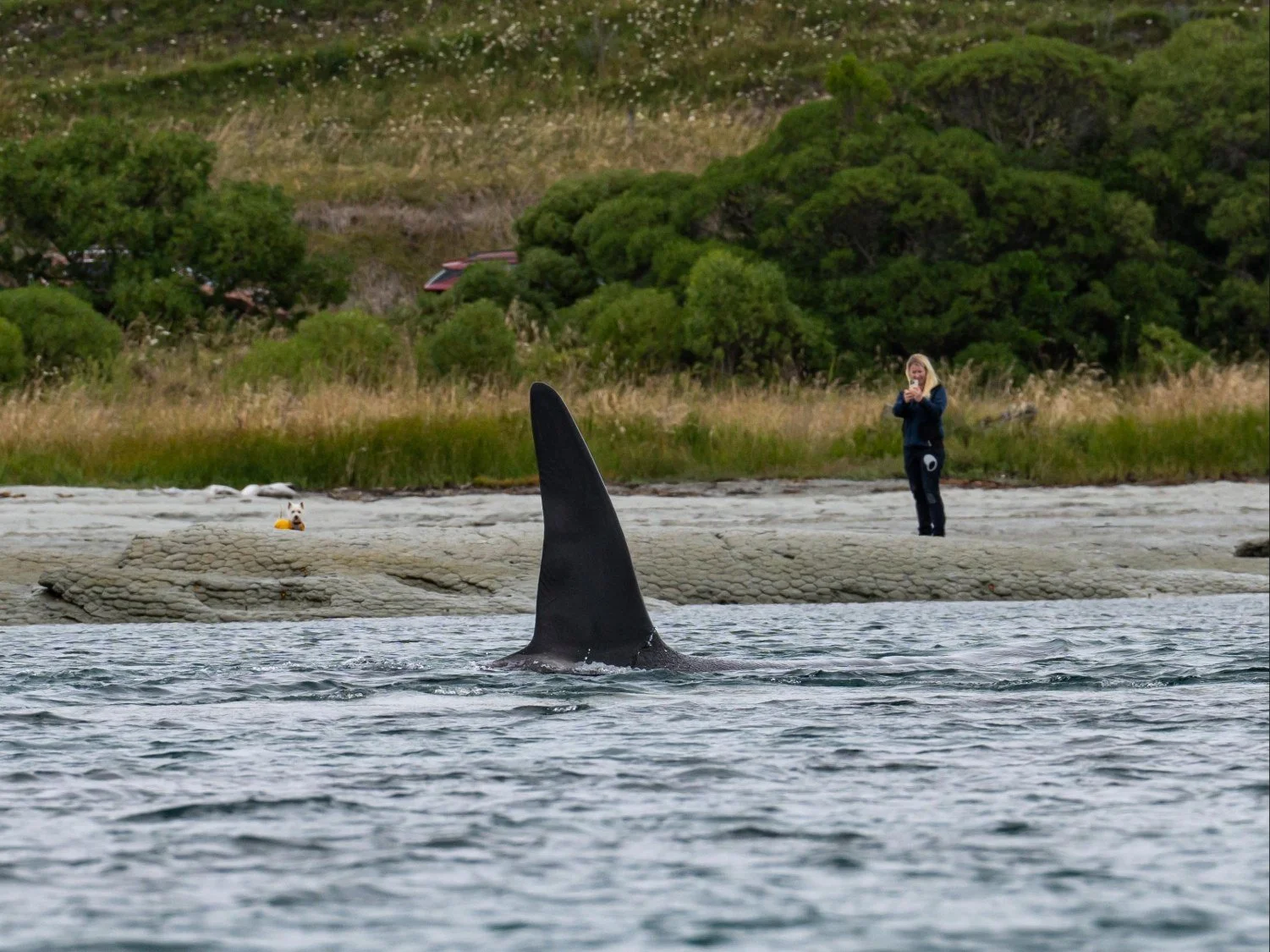
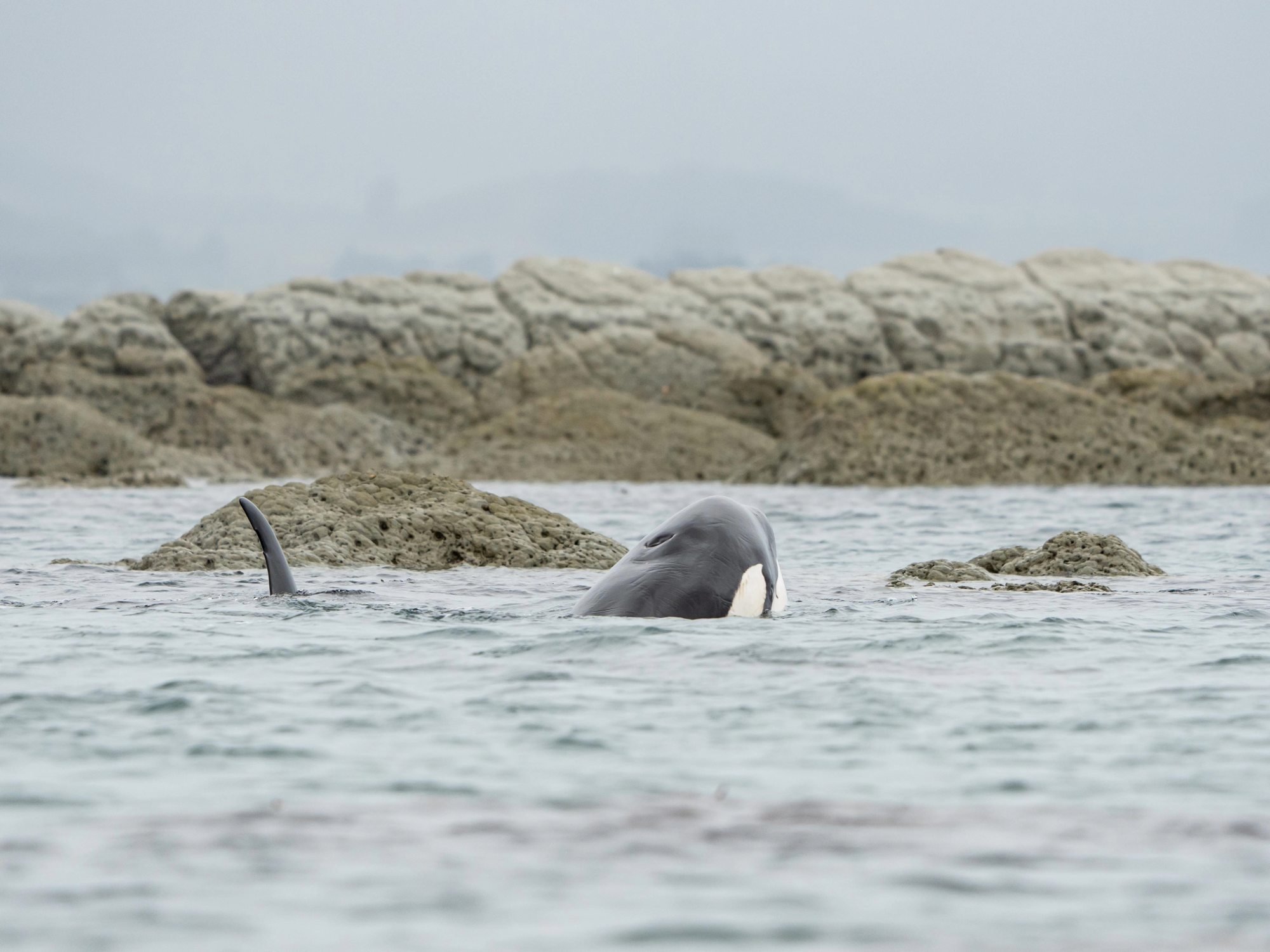
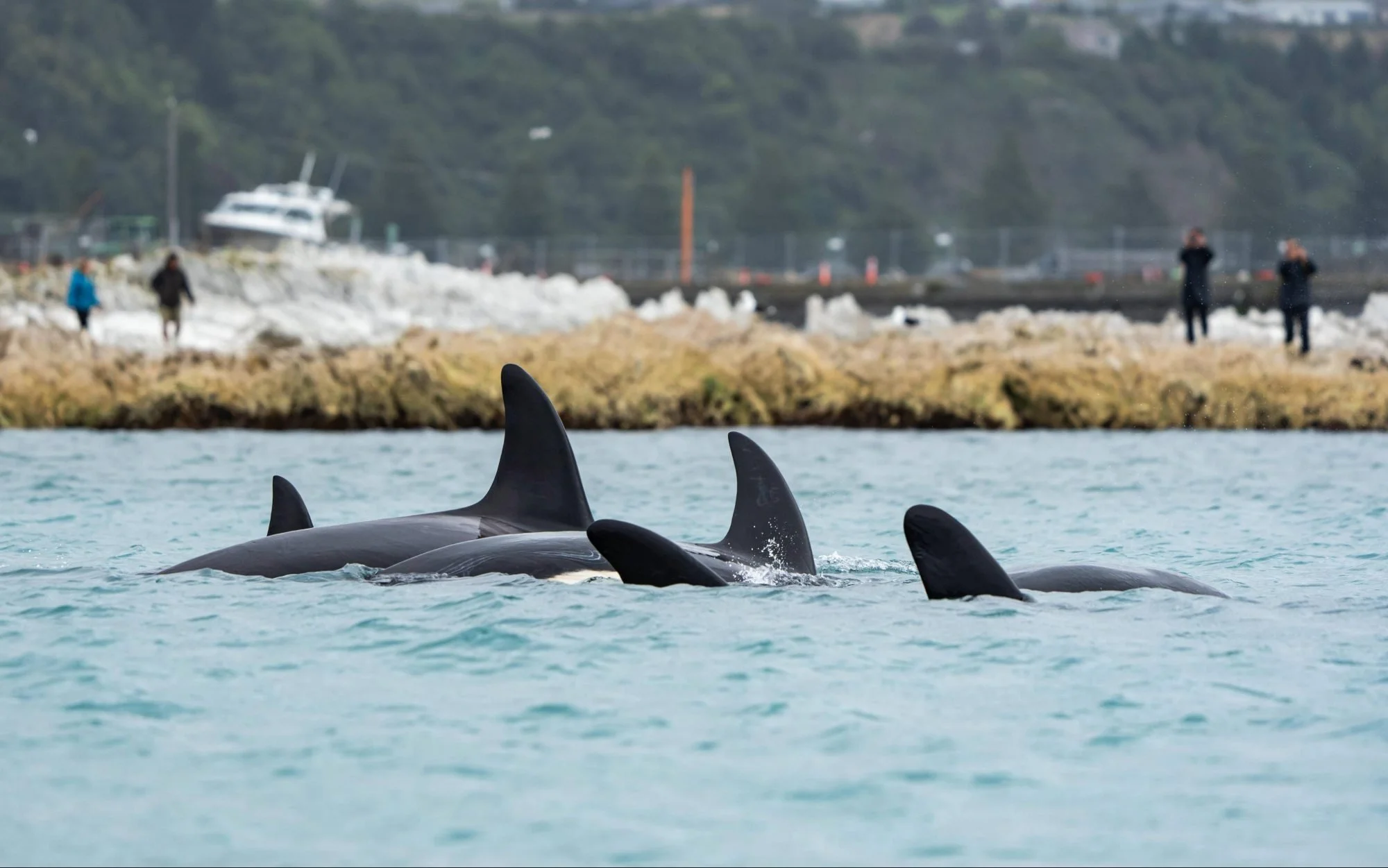
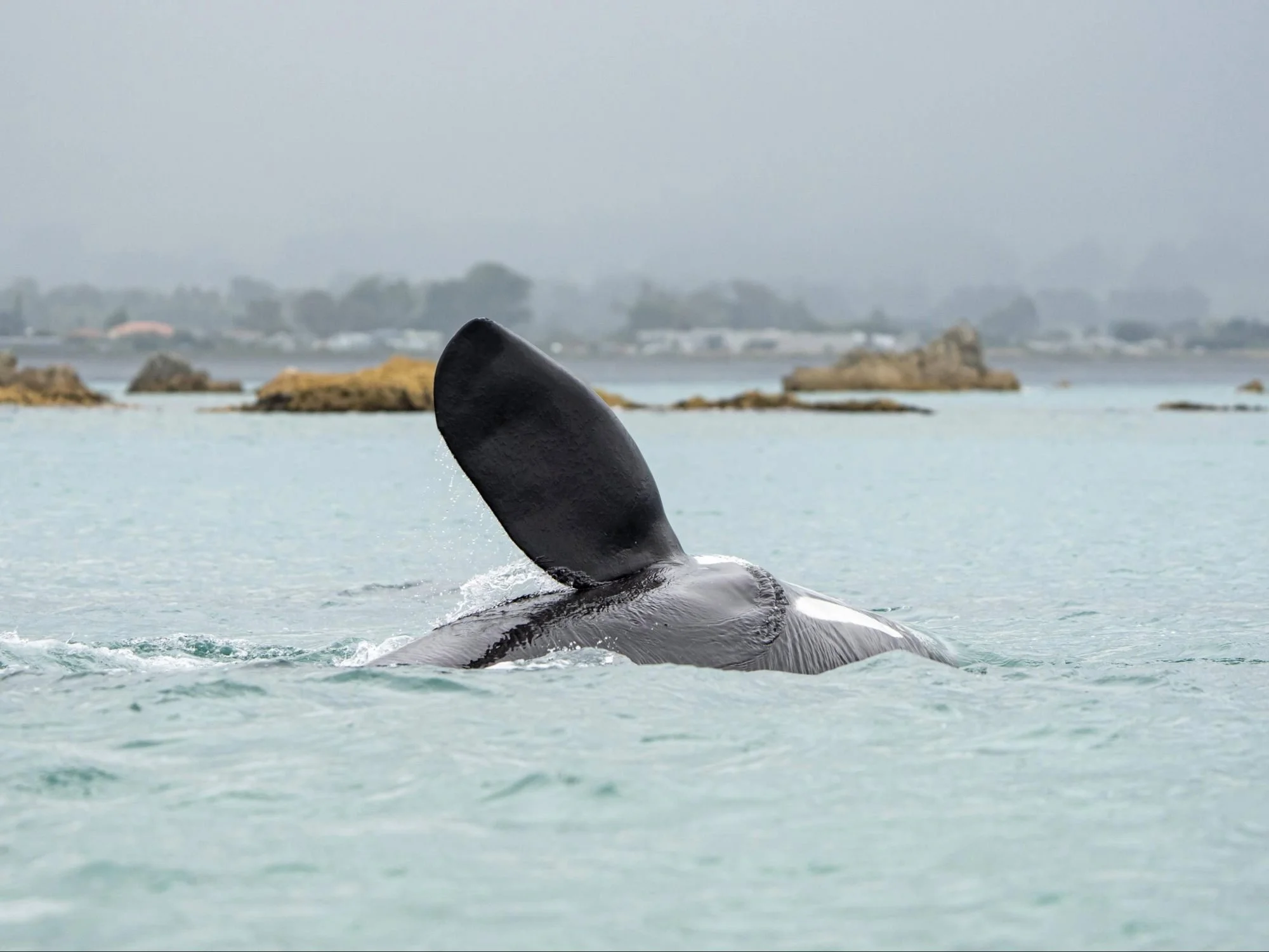
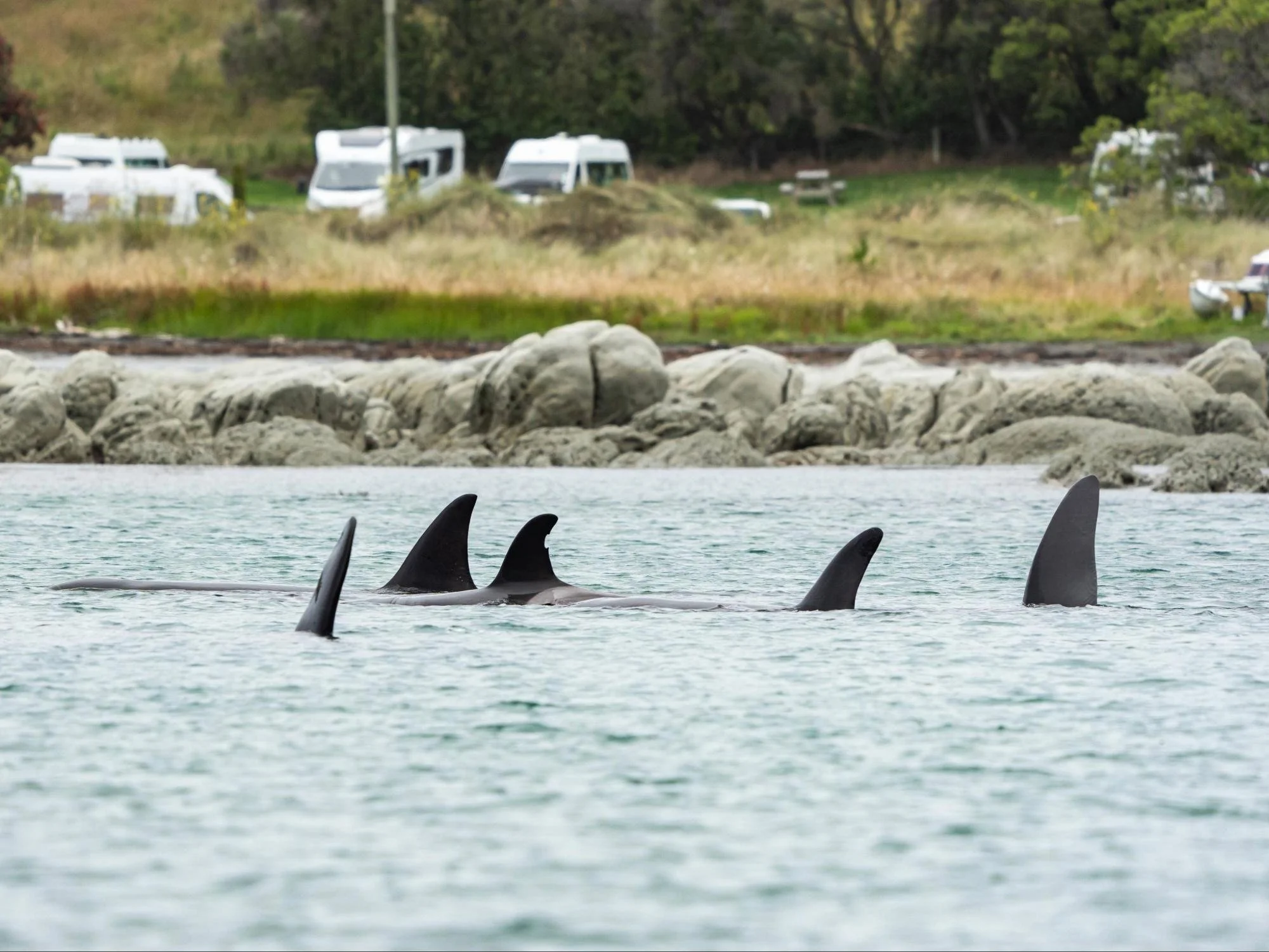
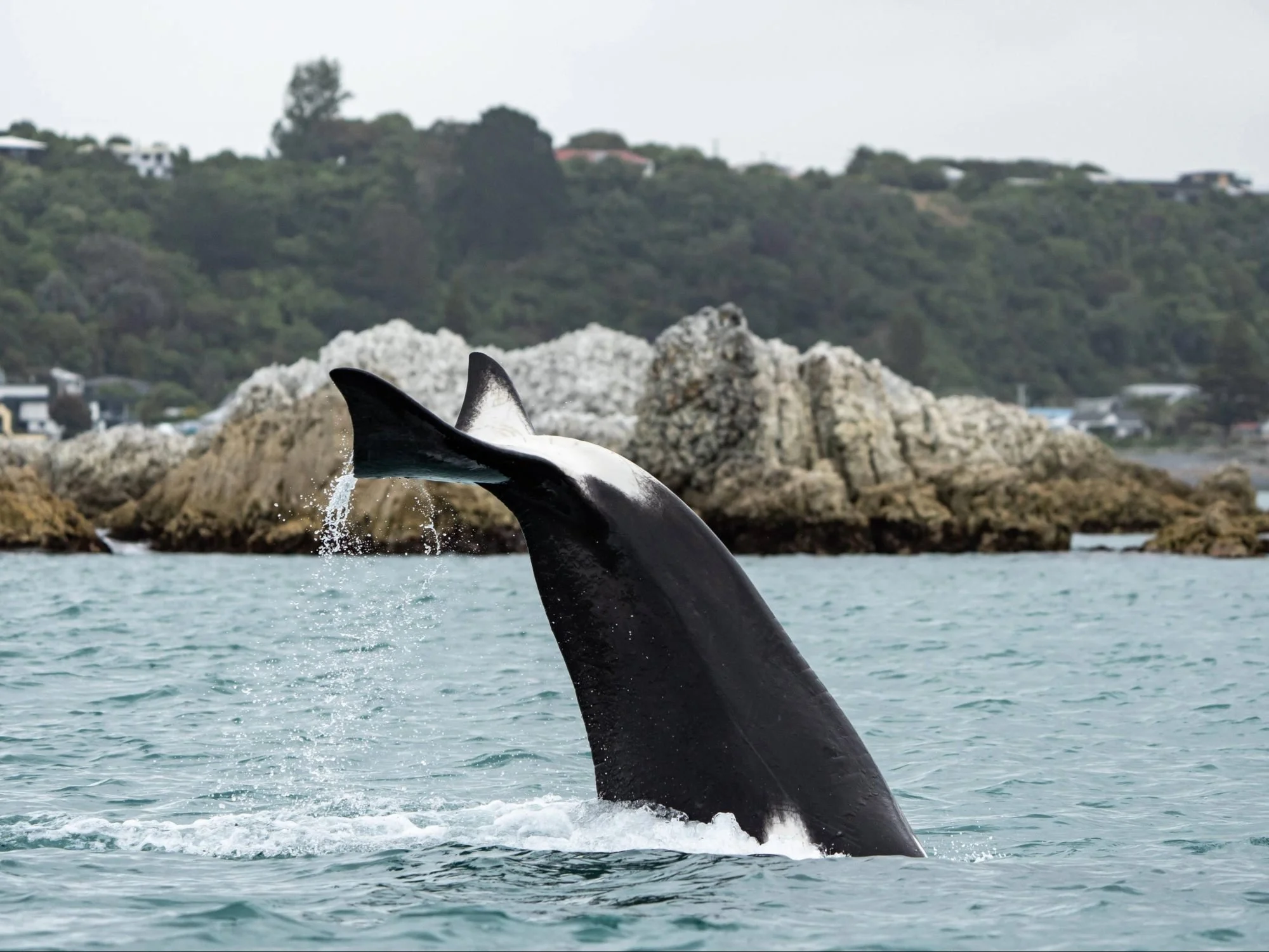
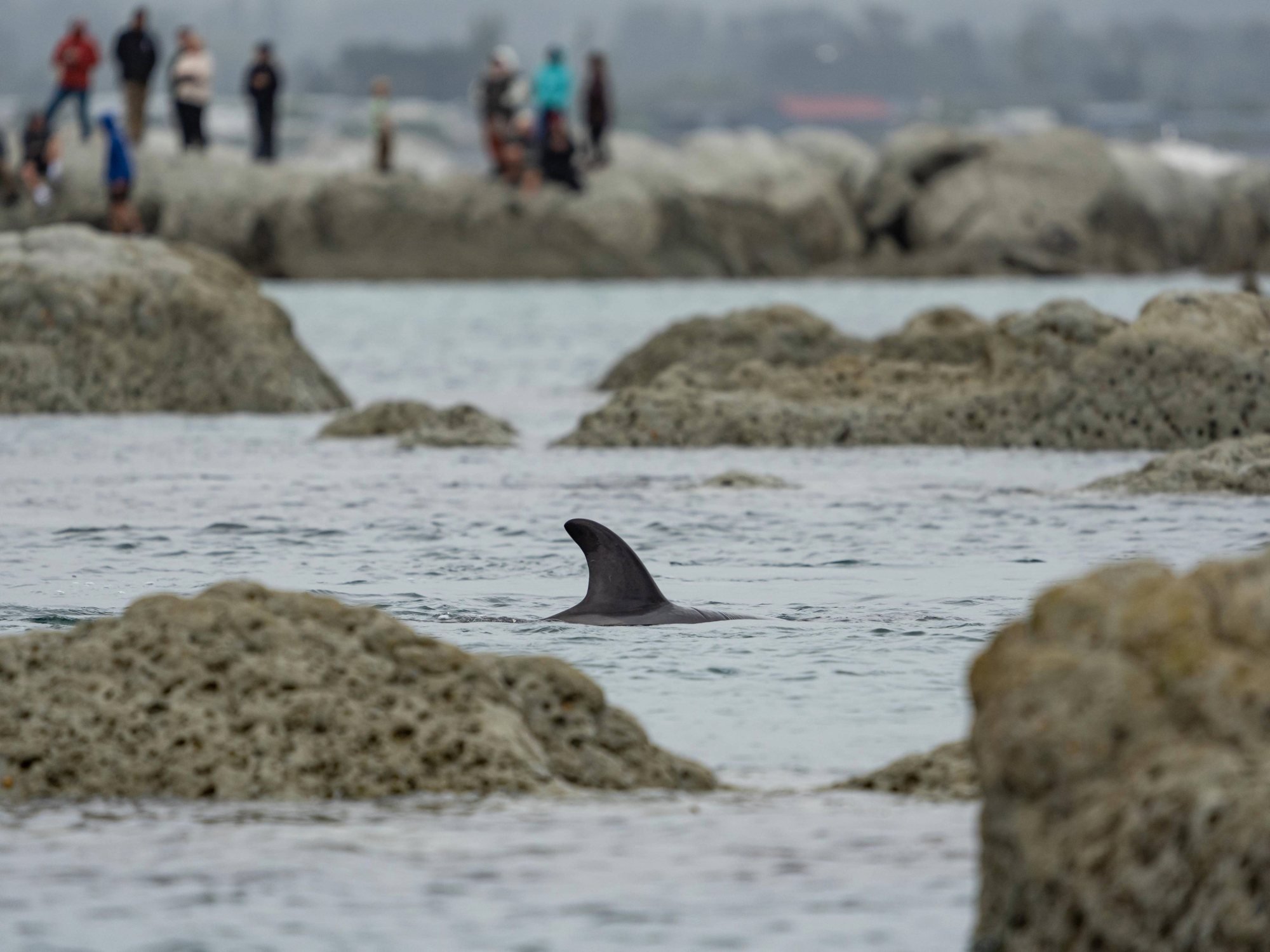
Each individual of orca looks different which is the same for other species of whales and dolphins. Whales can be identified by distinguished features on their bodies, such as patterns on their side or their dorsal fins. For an orca, the shape of the dorsal fin with its nicks and notches along with the shape and position of the saddle patch is unique to each individual. Like us humans having finger prints, they have their own unique fin.
The orcas pictured below are known as Nicky and Niko. Nicky is a female who has a large nick at the back of her dorsal fin and she is often seen travelling with one or two males who are both presumed to be her sons. On this particular day, she was travelling with Niko who has two distinct, small nicks at the back of his dorsal fin.

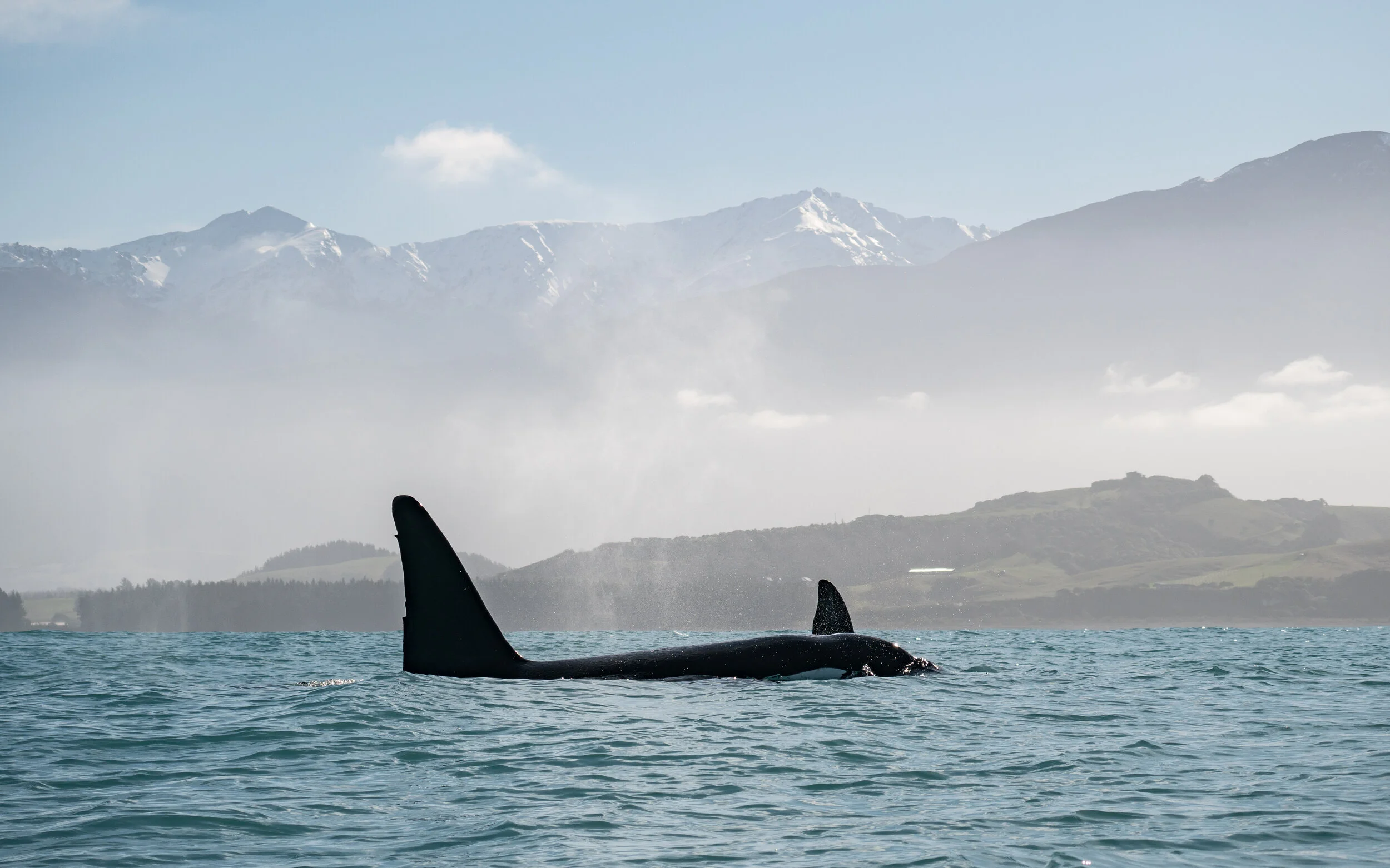

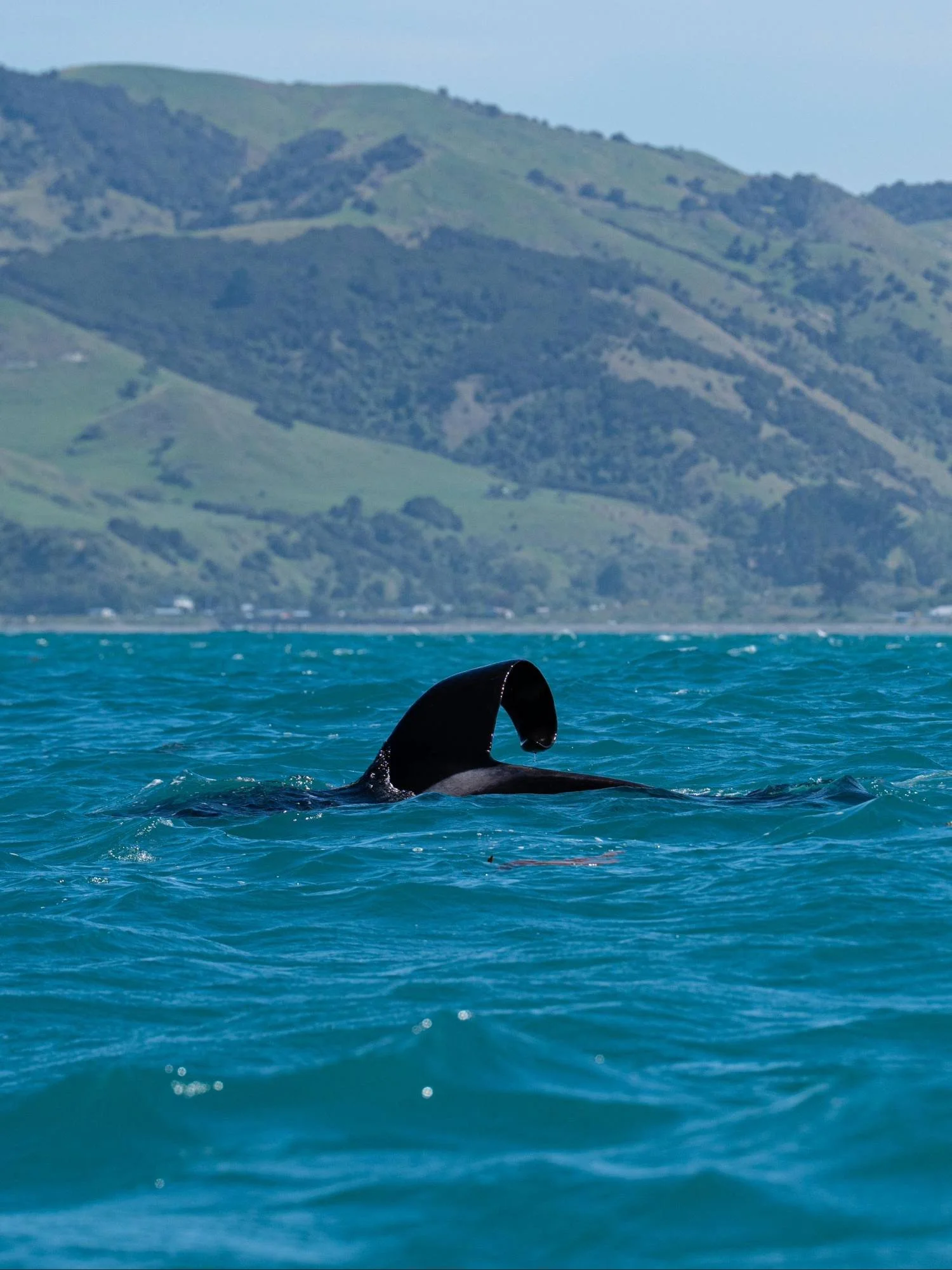
A pod that is unique to the Kaikōura area is Jigsaw’s pod. She used to travel with her two sons Groovy and Bentip. In the last couple of years though, she has only been seen with Bentip, Groovy has unfortunately not been seen for several years and it likely that he is deceased. Bentip is one of those few wild orcas who has a collapsed dorsal fin. This is quite uncommon in the wild and is more often observed in captive orcas. The reason for a dorsal fin to collapse is unknown but may be linked to stress or overall health.
Did you know that orca live in a matriarchal community? This means that the older female of a pod is the one in charge. That is usually a mother, aunt or even grandmother.
One of the TOP places in the world to view these incredible animals is in Western Australia, in Bremer Bay. The population of Bremer canyon can be seen in the (Southern) summer months; December-April. Here they specialise in hunting beaked whales. Beaked whales can be very difficult to encounter around the world as they are very deep divers and can stay underneath the surface for hours at a time. In Bremer, you often see them in the mouth of an orca. The orcas there do not only feed on beaked whales though and some pods have a very varied diet. They may also feed on giant squid, fish, and large baleen whales. In early 2025 I was fortunate enough to witness the pods of Bremer taking down a juvenile blue whale, something I never though I would witness.
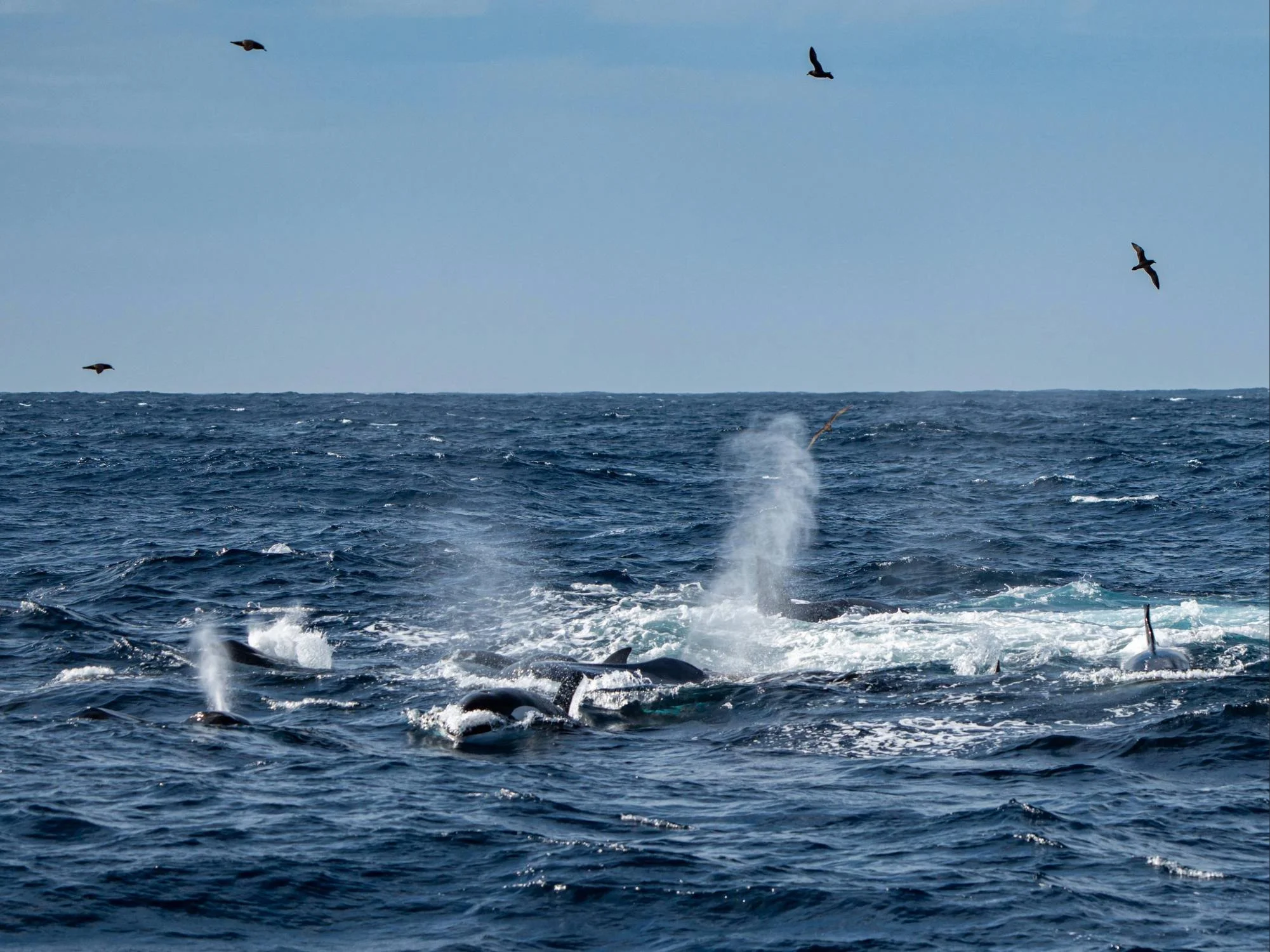
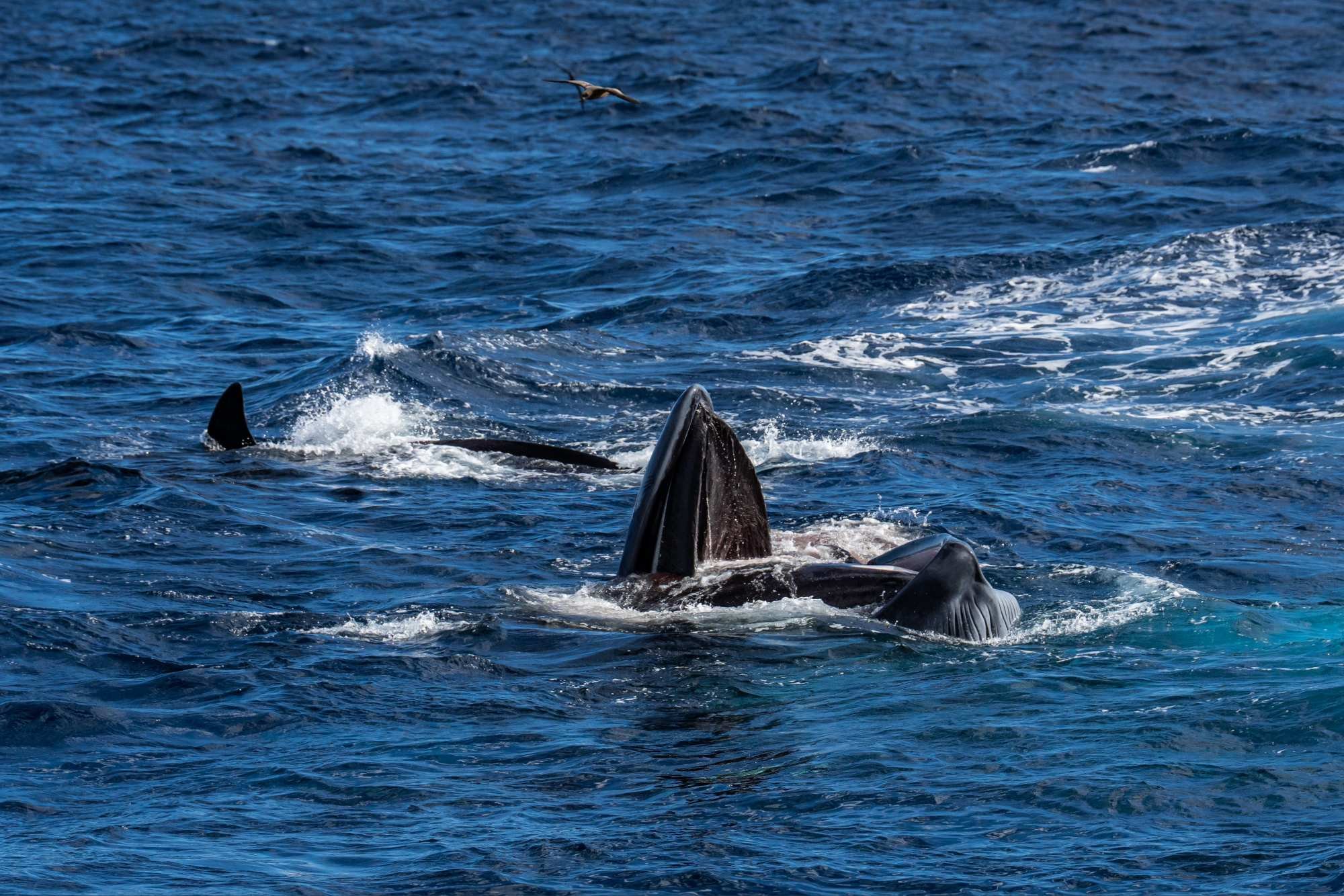
The weather in the Bremer Bay canyon can be wild and the Southern Ocean often provides 2-3 metre waves which is great for the orca as they appear to hunt more efficiently in bigger seas. If you consider a visit to see the Bremer orca, I can highly recommend Naturaliste Charters who provide excellent tours out to see the orca. It is not for the light hearted though and be prepared for big seas! I have had the privilege of joining the Naturaliste team for 3 consecutive years as the onboard photographer for a week during the orca season.
To take it all back to the beginning of my orca days, the very first time I saw a pod of orca was in the North of Norway in Stø and Andenes. I went there in the hopes of viewing sperm whales but somehow we ended up viewing orca instead, on two occasions! I did see sperm whales there a few years later though so not all hope was lost. There are two different eco-types of orca in Norway. One feed on mammals whereas the other feed on herring. We came across a large pod of orca who collectively fed on herring in the fiord and created quite a feeding frenzy. Even a white-tailed sea eagle came to join the party!


One of the most famous places in the world to encounter orca would be in the Strait of Juan de Fuca, which is a body of water between Seattle, USA and Victoria, Canada. While there I saw both resident orca who feed exclusively on salmon and the transient orca who feed on mammals such as seals and porpoises.


Orca in the Strait of Juan de Fuca